Lisl Pullinger, Ege Tekinbas, and Elena Cornaro
English
This publication presents case studies of instances where mining companies adopted policies and practices to support gender equality and social inclusion. Case studies focus on Chile, the Democratic Republic of the Congo, Mauritania, and South Africa. Each of the following cases is accompanied by an analysis of the relevant regulatory framework enabling good mining practice, as well as key lessons learned.
The Gold We Choose explores the legacy of the planetGOLD Philippines Project, capturing its milestones, partnerships, and the lives it has transformed. Through compelling stories from the ground, striking images of change, and the voices of miners, leaders, and communities, this book honors a sector often overlooked, yet vital to both local and national economies.
More than a record of achievements, it is a powerful testament to what becomes possible when people come together to build a small-scale gold mining industry that is mercury-free, safer, cleaner, and truly inclusive.
From the mining tunnels of Paracale to the highlands of Sagada, this
This study is an assessment of the existing legal and policy framework in the Philippines on artisanal small-scale gold mining (ASGM) in order to determine the pathways for the formalization of the ASGM sector. The study specifically aims to: (1) Review and analyze the existing policies and legal framework governing the ASGM sector, gold trading, and illicit financial flows (IFF) in the Philippines; (2) Assess the effectiveness of the implementation of the laws and regulations governing ASGM in the two project sites, namely: Paracale, Camarines Norte and Sagada, Mountain Province; (3) Identify the gaps and barriers, both legal and non-legal
Part of the toolkit Supporting Best Practices at Artisanal Gold Mines developed by IMPACT, planetGOLD Uganda, and planetGOLD Côte d’Ivoire to help artisanal gold mining communities strengthen their capacity on issues that affect their health, safety, and livelihoods, this facilitator guide supports users in identifying key risks within the sector and taking appropriate safety precautions while promoting more effective, safe, and environmentally responsible gold production.
The Intergovernmental Forum on Mining, Minerals, Metals and Sustainable Development
English
This report addresses the interconnectedness of gender equality and mine closure by reviewing current issues and practices in both mine closure and gender equality—and, importantly, where they intersect—and provides policy recommendations for governments to ensure that gender considerations are integrated into all aspects of mine closure
The planetGOLD programme works to make small-scale gold mining safer, cleaner, and more profitable from mine to market—by closing the financing gap, supporting formalization, and connecting miners with mercury-free technology and formal markets.
The 2024-2025 Annual Progress Report provides an overview of the progress made in these four key programmatic areas, and in other aspects of the programme including mainstreaming gender equality along with awareness raising and communication outreach. The report includes data from the national projects and the global coordination project.
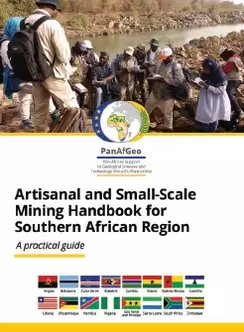
This handbook is the result of a training session which took place in Maputo, Mozambique from 26 to 30 September 2022, with participants from 16 countries in Southern African Region. This training aimed at building capacity in the Geological Surveys of the African continent in matters related to the assessment and management of mineral resources, use and sustainable land development, mitigation of natural risks and environmental protection.





Knowledge areas: