This report provides brief summaries of each of the Global Forum sessions. Readers interested in more in-depth information are invited to visit the event page on the planetGOLD website.
The planetGOLD programme works to make small-scale gold mining safer, cleaner, and more profitable from mine to market—by closing the financing gap, supporting formalization, and connecting miners with mercury-free technology and formal markets.
The 2023-2024 Annual Progress Report provides an overview of the progress made in these four key programmatic areas, and in other aspects of the programme including mainstreaming gender equality and outreach and communications. Available in English, French and Spanish, the report includes data from the national projects and the global coordination project.
This report provides a cross-programmatic assessment of the first phase (2018-2025) of the planetGOLD programme, which comprised nine country-level projects as well as a global coordination project. The report first examines planetGOLD’s strategies for ASGM development in terms of formalization, technology transfer, financial and market access, and communications, and includes observations and recommendations for activities under each pillar.
Common challenges, divergent approaches, and successful methods are discussed against the background of gender and Indigenous issues. The report then reflects on sustainability of outcomes and concludes
This Annual Progress Report features key activities, milestones, and figures from 23 country projects across the programme for the July 2022 – June 2023 reporting period. In addition to narrative summaries of key activities and accomplishments among these projects, this report incorporates data on four key output indicators that are tracked across the programme: tonnes of mercury abated; number of miners supported in their formalization processes; amount of money made available to ASGM through financial mechanisms; and amount of responsible ASGM gold produced.
The 2024 Global Forum on Artisanal and Small-Scale Mining was held in Batangas, Philippines, in June 2024. Organized by the planetGOLD Programme, this event aimed to gather a diverse range of stakeholders, including miners, government officials, international agencies, policy and technical experts, and private sector representatives. The primary goals were to inform, educate, and exchange best practices to enhance, professionalize and eliminate mercury in the ASGM sector.
The paper reports on several areas of ASM intervention applied across World Bank programs over the last five decades to understand what has and has not worked well.
"The paper's principal audiences are World Bank Country Management Units and government clients, however given the paper’s important findings on support to the sector, secondary audiences include bilateral partners (donors) and the network of stakeholders involved in ASM who are critical for helping to build a new culture of scaled partnership to the sector."
The overarching goal of this handbook is to establish a common knowledge base on the impacts of mercury use in the ASM sector on human health and the environment among all the stakeholders involved in or connected with artisanal gold mining.
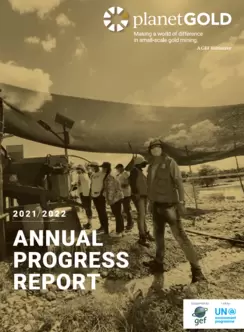
This report documenting planetGOLD’s progress from July 2021 through June 2022 shows how project teams in planetGOLD made key advances toward helping miners go mercury-free, by improving miners’ awareness of the dangers of mercury use, educating and demonstrating to them viable technical alternatives, and progressing in creating an enabling regulatory and financial environment that supports miners to undertake this transition.
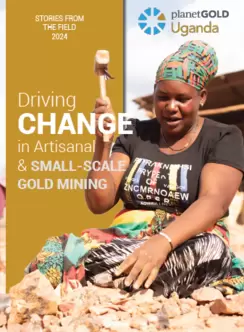
Artisanal and small-scale gold mining (ASGM) plays a vital role in Uganda's economic development, providing significant income and employment opportunities for miners and their communities. Since the planetGOLD project began in Uganda two years ago, the progress within the ASGM sector has been remarkable. This publication highlights the impact of the planetGOLD project, featuring stories directly from artisanal miners and our partners.
The Quick Start Guide summarizes and provides a visual overview of the key issues and recommendations for incorporating gender dimension into National Action Plans for artisanal and small scale gold mining. The document is based on the detailed guidance presented in UNEP's Guide on Incorporating Gender Dimensions into National Strategy Setting in the Context of Chemicals Management.



Knowledge areas: