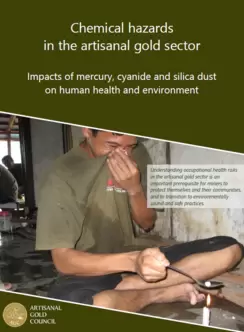
The Artisanal and Small-scale Gold Mining (ASGM) sector typically consists of small groups or individuals extracting gold with semi-mechanized and low-tech methods. Mining sites tend to have poor occupational safety standards and practices exposing miners to various occupational health hazards. Chemical risks include the exposure to toxic substances such as mercury, cyanide and silica dust. Other occupational health risks include painful disorders of the muscles and skeleton (e.g. from heavy lifting), physical trauma (e.g., from slipping, falling, landslides) or exposure to noise, heat and humidity. Furthermore, poor living conditions in
Louise E. Buck, Sara J. Scherr, Christopher M. Planicka, Krista Heiner
English
The importance of partnership in bringing about effective landscape stewardship warrants careful examination of characteristics of good partnerships and effective ways of building them. This chapter contributes to that task by drawing upon pertinent literature and empirical evidence from landscape initiatives to characterise the main elements of a partnership for landscape stewardship and put forward a framework to aid in designing effective partnerships.
David Sturmes-Verbeek and Candice Jumwa, The Impact Facility
English
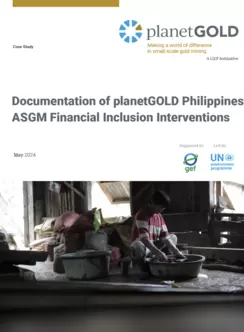
This case study documents the finance models implemented by the planetGOLD Philippines project in artisanal and small-scale gold mining (ASGM) communities, with a consideration of the gender aspects of the projects.
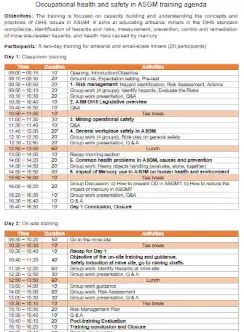
The training is focused on capacity building and understanding the concepts and practices of OHS issues in ASGM. It aims at educating artisanal miners in the OHS standard compliance, identification of hazards and risks, measurement, prevention, control and remediation of mine site-related hazards, and health risks caused by mercury.
Louise E. Buck, Sara J. Scherr, Christopher M. Planicka and Krista Heiner
English
The importance of partnership in bringing about effective landscape stewardship warrants careful examination of characteristics of good partnerships and effective ways of building them. This chapter contributes to that task by drawing upon pertinent literature and empirical evidence from landscape initiatives to characterise the main elements of a partnership for landscape stewardship and put forward a framework to aid in designing effective partnerships.
This training provides four modules: (1) Production (2) Responsible Mining Standards, (3) Chain of Custody and Due Diligence, and (4) Branding and Marketing. Individual modules can be found in the resource library.
Ndeye Marame Ngom; David Baratoux; Matthieu Bolay; Anna Dessertine; Abdoulatif Abass Saley; Lenka Baratoux; Modou Mbaye; Gayane Faye; Alphonse Kouakou Yao; Kan Jean Kouamé
English
The authors present the value of remote sensing techniques to complement the knowledge on artisanal mining impacts, including for detection of illegal sites, the evaluation of the degradation of soils and waters, the deforestation and the monitoring of expansion of ASGM with time. While these techniques are relevant, they sometimes are blind to gender issues, labor relations, mobility, migration, and insecurity.
Jashaf Shamir A. Lorenzo, BAN Toxics,
IUCN - National Committee of the Netherlands
English
This report documents the illicit mercury flows in Mindanao, Philippines as well as the various governance practices for mercury in the study areas. The study is conducted by BAN Toxics and focuses on Artisanal and Small-Scale Gold Mining (ASGM) communities in the island, where the majority of illicit mercury enters the country.
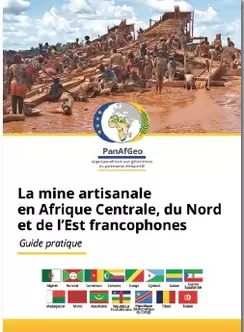
Ce guide pratique sur « La mine artisanale en Afrique Centrale, du Nord et de l’Est francophones » est le fruit d’un séminaire qui a pris place à Douala, Cameroun du 13 au 16 mars 2023.



Knowledge areas: