Researchers or other assessors should use this guide to help ministries of health develop a public health strategy as part of the ASGM National Action Plan. The evidence collected will clarify key issues to consider for the public health strategy. The approach for collecting and using the evidence was developed by WHO and the Swiss Tropical and Public Health Institute and pilot-tested in three countries – Ghana, Mozambique and Nigeria – between 2017 and 2019.
Also available in Arabic, French, Portuguese, Russian, and Spanish.
The 2020 Report uses the Sustainable Development Goal 8 (SDG8): “promote sustained, inclusive and sustainable economic growth, full and productive employment and decent work for all” as the framework for analyzing artisanal and small-scale mining's contributions to global development.
The purpose of this analysis is to compare what was planned for in the CMEP with what was achieved and what could have been done differently to serve as a learning for other Projects.
The CARING Gold Mining Project’s overall goal is to increase to address child labour and working conditions issues in artisanal and small-scale gold mining (ASGM) globally and in Ghana and the Philippines, its pilot countries. It does so by pursuing four outcomes, the first three to be carried out in the pilot countries and the fourth one on a global scale.
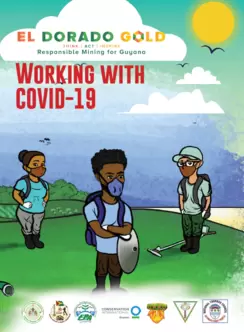
Mining districts and their nearby Indigenous Communities in Guyana have been impacted by COVID-19. This booklet provides guidance and recommendations for the artisanal and small-scale gold mining sector to support a safe, clean, and healthy environment for workers.
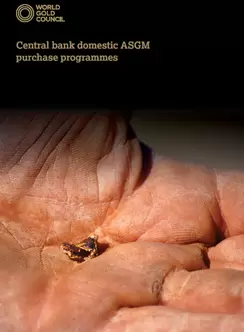
This report examines four countries whose central banks actively purchase gold from domestic ASGM production, and considers lessons learned in formulating policies towards ASGM. It describes central bank domestic purchase models, the impact they can have on improving practices associated with small-scale gold production, and the benefits of domestic gold buying for reserve management purposes.
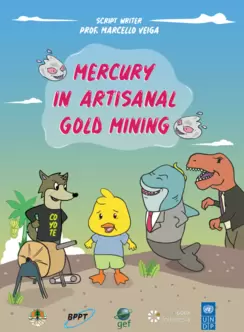
What is mercury, and what can happen if you are exposed to it? In this comic book created by the planetGOLD Indonesia project with a script by Professor Marcello Veiga, these topics and more are explored through animated characters teaching young audiences fundamental truths about the dangers of mercury in ASGM and how they can avoid it.
This study examines illicit financial flows (IFF) associated with the ASGM sector in Ghana and Liberia and reveals a complex web of informal and illicit activity associated with IFFs, with detrimental consequences for development. It focuses on gold because of its prominence in the West African Region and artisanal small-scale mining (ASM), rather than large-scale mining (LSM).
BRI and Nexus3, in collaboration with other nongovernmental organizations, is leading this three-year project, the purpose of which is to support the Government of Indonesia in restricting mercury supplies, especially for the artisanal small-scale gold mining (ASGM) sector.



Knowledge areas: