USAID’s Commercially Viable Conflict-Free Gold Project, known locally as “Zahabu Safi” is a five-year project, implemented in the Democratic Republic of the Congo (DRC) by Global Communities and Levin Sources. The project is designed to build on recent successes achieved by donor-funded initiatives to export responsibly sourced gold to jewelry buyers in North America and Europe. This learning brief is designed to deepen understanding of the logistical barriers and incentives when transporting, storing, and preparing to export gold from eastern DRC.
Finance entities including banks, microfinance institutions, and other lenders do not commonly provide loans/credit/financing to the ASGM sector as the risks are often perceived to be too high. To support financial entities and banks in developing financial products that would tailor to ASGM sector, the planetGOLD Indonesia project identified 8 modified/alternative models of current financing schemes/mechanisms for banks/financial entities that are detailed in this fact sheet.
Midway through its project lifespan, the planetGOLD project in Indonesia reflects on the achievement of its formalization target. Taking local situations into consideration, the project reflects that supporting the formalization of 60 mining groups in the 6 project locations within 5 years may not be easy. The project is therefore opting to re-route its supports based on the outputs resulting from each formalization target.
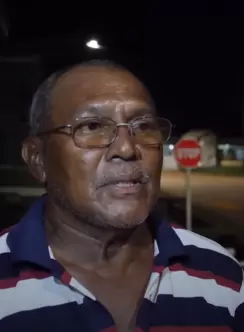
The planetGOLD Guyana project is supporting Guyana with the move towards reducing and eliminating, where possible, the use of mercury in ASGM sector. Here we meet up with one small miner from Region 8 in Guyana, South America where he shares his knowledge on the dangers or mercury and his experience as a miner.
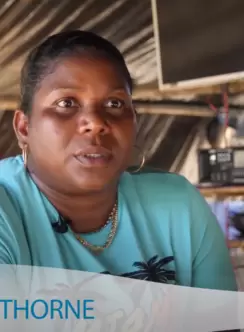
The planetGOLD Guyana project is supporting Guyana with the move towards reducing and eliminating, where possible, the use of mercury in ASGM sector. Here we meet up with one small scale woman miner from Region 8 in Guyana, South America where she shares her knowledge on the dangers or mercury and her experience as a miner.
The planetGOLD Guyana project is supporting Guyana with the move towards reducing and eliminating, where possible, the use of mercury in ASGM sector. Here we meet up with one small miner from Region 8 in Guyana, South America where he shares his knowledge on the dangers or mercury and his experience as a miner.
Solidaridad, with the support of the global luxury group Kering, take Village Savings and Loans Associations to the next level through an innovative revolving fund that empowers women led enterprises.
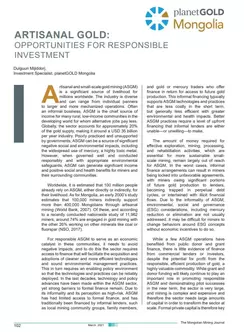
The planetGOLD Mongolia project published this article in the March 2021 issue of the Mongolian Mining Journal, touching on some key points on opportunities to invest in artisanal gold and on steps the Government of Mongolia has taken to promote responsible artisanal and small-scale gold mining.
To assess the socio-economic impact of the Covid-19 pandemic on the artisanal and small-scale mining (ASM) sector in Western Central African Republic (CAR), IPIS conducted a series of phone surveys with key informants located on 260 gold and diamond mining sites.



Knowledge areas: