This book presents the results of the study 'New Approaches for Improving the Development Outcomes of the Extractive Industry in Peru: Improving Impacts on Women in Poverty and Their Families.'
To support ministries of health develop their detailed public health strategies for inclusion in ASGM National Action Plans (NAP), WHO, in collaboration with the Swiss Tropical and Public Health Institute, developed a research approach. The approach was pilot tested in three African countries in the process of developing a NAP. The evidence collected and the recommendations that emerged by applying the research approach guided ministries of health and other stakeholders in developing the public health strategies. This document is also available in French, Spanish and Portuguese.
This handbook is the result of a training workshop for staff from the geological survey authorities, the regulatory agencies and the universities involved in the ASM sector to strengthen their capacity to better assist the country’s ASM operators. It is intended to serve as a reference for the future involvement of the geological survey authority’s staff in the country’s ASM sector.
This handbook is the result of a training workshop for staff from the geological survey authorities, the regulatory agencies and the universities involved in the ASM sector to strengthen their capacity to better assist the country’s ASM operators. It is intended to serve as a reference for the future involvement of the geological survey authority’s staff in the country’s ASM sector.
This handbook is the result of a training workshop for staff from the geological survey authorities, the regulatory agencies and the universities involved in the ASM sector to strengthen their capacity to better assist the country’s ASM operators. It is intended to serve as a reference for the future involvement of the geological survey authority’s staff in the country’s ASM sector.
This handbook is the result of a training workshop for staff from the geological survey authorities, the regulatory agencies and the universities involved in the ASM sector to strengthen their capacity to better assist the country’s ASM operators. It is intended to serve as a reference for the future involvement of the geological survey authority’s staff in the country’s ASM sector.
The technology, jewelry, financial, and automotive sectors are increasingly at risk of purchasing gold that benefits armed groups responsible for mass atrocities in multiple countries in East and Central Africa. Five main policy issues continue to incentivize the conflict gold trade and disincentivize the responsible artisanal trade, presenting key opportunities for action by governments, companies, and banks.
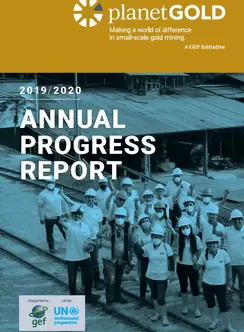
The 2019/2020 Annual Progress Report published by planetGOLD provides an overview of the progress made since the launch of the planetGOLD programme in early 2019 and includes data from the initiation of each of the national projects through fall 2020. This executive summary provides a snapshot of the key points from the full report, across the programme's 4 key programmatic areas: formalization, access to finance, technical solutions, and access to formal markets.
Recognizing that lasting change requires addressing root economic and social drivers of mercury use, planetGOLD is working to accelerate formalization, increase access to formal finance and open avenues to formal gold markets, creating the enabling conditions for the uptake of more efficient, mercury-free technology. This report provides an overview of the progress made since the launch of the planetGOLD programme in early 2019 and includes data from the initiation of each of the national projects through fall 2020.
The planetGOLD Guyana project is assisting artisanal and small-scale gold mining communities implement mercury-free technologies that also increase yield and profits. This video demonstrates the use of three types of equipment that concentrate gold from alluvial deposits without using mercury - the gold kacha, gold cube, and blue bowl. The devices can be used in combination with each other and with other equipment to create an efficient and mercury-free gold recovery process.





Knowledge areas: