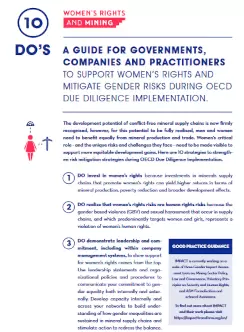
Women’s critical role in mineral production and trade - and the unique risks and challenges they face – need to be made visible to support more equitable development gains. Here are 10 strategies to strengthen risk mitigation strategies during OECD Due Diligence Implementation.
This encyclopedia offers a snapshot of some of the key actors, initiatives and programmes in the field of gender and mining. It is intended as a living document, there to help practitioners gain an overview of the sector and potentially ideas for projects or collaborations, rather than as a comprehensive document setting out the definitive list of who is who in the field.
With support from the United Nations Environment Programme (UNEP), the Just Gold project has conducted two environmental field assessments and developed steps to implement recommendations on environmental management techniques and technical assistance to reduce mercury use in gold mining.
IMPACT documents how registered traders and exporters in DRC, Rwanda, and Uganda provide a sheen of legality by declaring a small percentage of their gold exports while pocketing massive profits from the illicit trade. They thwart attempts to disrupt their scheme by reconfiguring their operations across the region when necessary or by creating phantom entities.
This presentation explores potential risks to the health of ASM communities presented by the pandemic including access to adequate healthcare and delivery of preventative health services. In addition findings on the impact of the pandemic on men and women were explored, highlighting the disproportionate negative impact of food security experienced by women.
planetGOLD Philippines / Artisanal Gold Council
Filipino
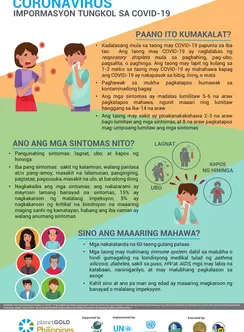
This set of posters developed by the planetGOLD Philippines project team with content produced by the Artisanal Gold Council are awareness raising resources on COVID-19 for the artisanal mining sector. One poster focuses on preventive measures at the mining site, while the other poster provides general information about COVID-19. The information is based on the most recent scientific findings on the coronavirus and recommendations from reputable health organizations.
Responsible Jewellery Council (RJC) has joined a call to action urging the gold and jewellery industry to include Artisanal Scale Mining (ASM) in their sourcing policies and practices.
This blog contributes to this ongoing discussion by providing insights on the gendered impacts of the pandemic on artisanal and small-scale mining (ASM) communities. They draw on our recent data collection in Mozambique, Zimbabwe, Uganda and the DRC as part of the Delve COVID-19 Impact Reporting initiative.
Levin Sources launched a research effort into the impacts of the COVID-19 crisis on ASM communities in Mozambique, Uganda, Zimbabwe and the DRC, as part of a global data collection exercise on the impacts of COVID-19 in ASM communities. This blog highlights 4 of their key findings from Uganda.
Patricio Colón Velásquez-López, Claudia Páez-Varas, Ximena Benavides-Zúñiga, Francisco Gallegos, Gerald Fallon
English
CIRDI conducted an exploratory study of the nature of women mine-rock waste collectors’ (WWC) activities and analysed their working conditions managing mine waste rock in Ponce Enríquez, Ecuador. A WWC is locally known as janchera, and currently hundreds of women are involved in this activity within artisanal and small-scale gold mining.



Knowledge areas: