The Due Diligence Hub provides tailored due diligence resources to help you ensure that the minerals in your supply chain, especially tin, tantalum, tungsten and gold are responsibly mined and sourced.
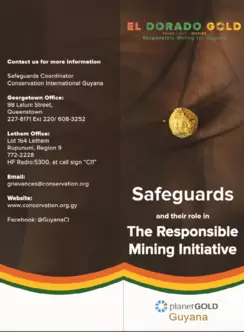
Safeguards help ensure that project activities result in minimal or no negative effects on people or the environment. In this brochure, which when unfolded can also be used as a poster, introduces four safeguards that guide the planetGOLD Guyana project in delivering benefits to intended persons.
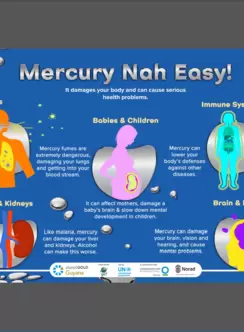
This set of posters created by the planetGOLD Guyana project provides information about the dangers of mercury exposure, health problems it can cause, and practical tips miners can take to reduce the risk of exposure for themselves and their families.
Jashaf Shamir A. Lorenzo, BAN Toxics,
IUCN - National Committee of the Netherlands
English
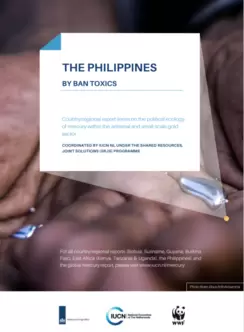
This report documents the illicit mercury flows in Mindanao, Philippines as well as the various governance practices for mercury in the study areas. The study is conducted by BAN Toxics and focuses on Artisanal and Small-Scale Gold Mining (ASGM) communities in the island, where the majority of illicit mercury enters the country.
Programa Nacional para la Gestión de Sustancias Químicas Peligrosas
Spanish
Con el objetivo de apoyar a la Minería Artesanal y de Pequeña Escala (MAPE) el Programa Nacional para la Gestión Ambientalmente Adecuada de Sustancias Químicas en su Ciclo de Vida de PNUD en alianza con planetGOLD y financiamiento de GEF junto al Instituto de Investigación Geológico Energético (IIGE) presenta la segunda “Las Reglas de Oro” video con consejos para retomar las actividades laborales en la MAPE.
National Program for the Management of Hazardous Chemical Substances
Spanish
Con el objetivo de apoyar a la Minería Artesanal y de Pequeña Escala (MAPE) el Programa Nacional para la Gestión Ambientalmente Adecuada de Sustancias Químicas en su Ciclo de Vida de PNUD en alianza con planetGOLD y financiamiento de GEF junto al Instituto de Investigación Geológico Energético (IIGE) presenta “Las Reglas de Oro” consejos sencillos para que este sector productivo tome medidas frente a la COVID-19.
planetGOLD Peru, Solidaridad, Alianza por la Minería Responsable, Artisanal Gold Council, Red Social, Megam, Centro de Innovación Científica Amazónica, Fairtrade & Pure Earth
Spanish
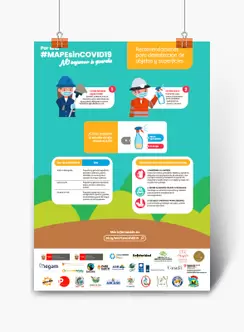
Part of the Campaña "MAPE sin COVID-19" (ASGM without COVID-19 Campaign) led by the planetGOLD Peru project and a coalition of other organizations and local governments, this poster provides artisanal and small-scale mining communities with recommended steps for disinfecting objects and surfaces. It is designed to be printed on A4 size paper.
planetGOLD Peru, Solidaridad, Alianza por la Minería Responsable, Artisanal Gold Council, Red Social, Megam, Centro de Innovación Científica Amazónica, Fairtrade & Pure Earth
Spanish
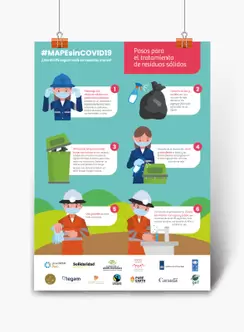
Part of the Campaña "MAPE sin COVID-19" (ASGM without COVID-19 Campaign) led by the planetGOLD Peru project and a coalition of other organizations and local governments, this poster provides recommended steps for treating solid waste. It is designed to be printed on A4 size paper.
planetGOLD Peru, Solidaridad, Alianza por la Minería Responsable, Artisanal Gold Council, Red Social, Megam, Centro de Innovación Científica Amazónica, Fairtrade & Pure Earth
Spanish
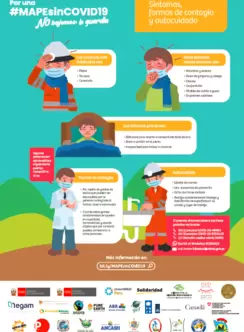
Part of the Campaña "MAPE sin COVID-19" (ASGM without COVID-19 Campaign) led by the planetGOLD Peru project and a coalition of other organizations and local governments, this poster provides information for artisanal and small-scale gold mining communities on key symptoms of the virus, modes of transmission, and self-care tips. It is designed to be printed on A4 size paper.


Knowledge areas: