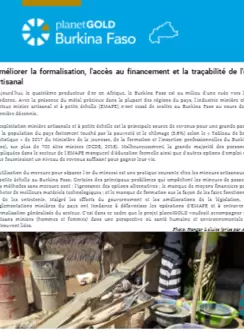
Afin d'améliorer la formalisation, l'accès au financement et la traçabilité de l'or artisanal, le projet planetGOLD Burkina Faso a créé cette brochure pour fournir un bref aperçu de la législation encadrant régissant le secteur EMAPE au Burkina Faso et, en collaboration avec le gouvernement du Burkina Faso, pour fournir des recommandations sur le cadre politique pour promouvoir et soutenir un secteur EMAPE durable intégrant la protection de l'environnement, la prévention du travail des enfants, la promotion de l'égalité du genre parmi les mineurs, la promotion de la protection sociale, la facilitation de l'accès direct des mineurs aux marchés
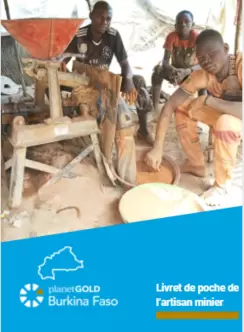
Ce livret a été élaboré pour permettre à l’artisan minier d’enregistrer, au fil du temps, les éléments de son activité en vue d’en garder une mémoire fidèle et exhaustive. Ce livret facilitera in fine l’inclusion financière de l’artisan minier qui d’ordinaire ne tient pas ses comptes de façon structurée empêchant ainsi que d’éventuels financiers puissent disposer d’une base rationnelle pour les accompagner.
Artisanal Gold Council,
planetGOLD Philippines
English
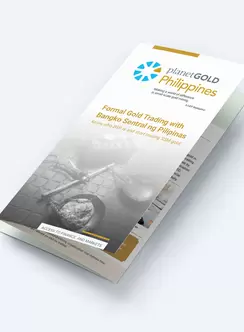
The brochure intends to encourage small-scale miners to sell gold to the BSP and its authorized representatives. It contains the advantages of selling gold formally, the basic information about the BSP, and its gold-buying conditions.
Artisanal Gold Council,
planetGOLD Philippines
English
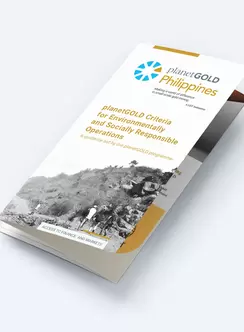
The brochure introduces a standard set of criteria for conformance of the SSM organizations under the planetGOLD program. It contains the summary of modules based on the CRAFT Code and the planetGOLD-specific criteria as per the GEF Environment and Social Safeguards requirements.
Gavin Hilson, Salvador Mondlane, Abigail Hilson, Alex Arnall, and Tim Laing
English
This paper reflects critically on efforts to formalize artisanal and small-scale mining (ASM) – low-tech, labour-intensive mineral extraction and processing – in Mozambique.
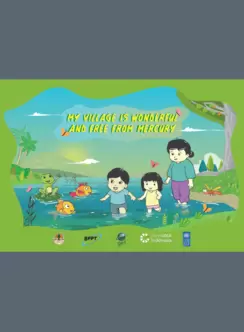
This comic book was produced by the planetGOLD Indonesia project for young audiences and as an educational tool for school teachers to use, raising awareness about the dangers of exposure to mercury used in artisanal and small-scale gold mining.
This study reveals that women are less recognized for their existence in ASGM. Undertaking a gender-sensitive situation analysis, including a barrier analysis, is a useful way to strengthen understanding of the context of marginalized actor in ASGM sector
With the results of these field researches, GOLD-ISMIA will develop a mobile application and a web portal database through which the estimation of the mercury avoided from the mercury-free processing units within the project locations can be monitored in a systematic way and on regular basis.



Knowledge areas: