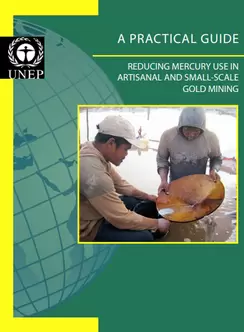
This guide describes the principals of reducing and eliminating mercury use in ASGM in an accessible manner. Featuring many photographs of ASGM equipment and techniques, the document explains the importance of milling and concentration, as well as other covering other topics such as retorts and tailings.
The face of ASGM and conditions in Indonesia can change for the better and healthier by switching miners to using mercury-free technologies and enabling them to sell their gold to the formal market. This video from the planetGOLD project in Indonesia explains why it's critical to Make Mercury History in artisanal and small-scale gold mining to ensure healthy food chains and to protect human health today and for future generations. Closed captions in English are available.
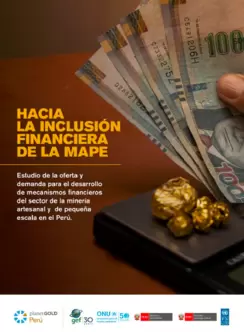
The research analyzes the barriers and limitations of this sector in the regions with the highest incidence or presence of small-scale mining in order to propose financial products and services ad hoc to the reality of ASM that allows them to be included in the formal financial system.
La investigación analiza las barreras y limitaciones de este sector en las regiones con mayor
incidencia o presencia de minería de pequeña escala con la finalidad de proponer productos y servicios financieros ad hoc a la realidad de la MAPE que les permita su inclusión en el sistema financiero formal.
El documento constituye un diagnóstico y, a la vez, un análisis de la oferta y demanda de productos y servicios financieros para la minería aurífera artesanal y a pequeña escala (MAPE), en el que se identificaron factores limitantes y oportunidades de introducción de productos y servicios regulados, previa definición de un plan de acceso al sistema financiero regulado.
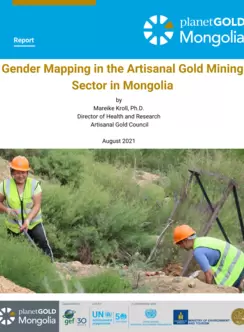
The objective of this report is to summarize gender dynamics in the artisanal and small-scale gold mining (ASGM) sector and their social and economic implications on women miners in Mongolia. The report concludes that, while some barriers exist, the ASGM sector offers viable livelihoods options for women and identifies encouraging opportunities for women to serve as agents of change for formalization and better mining practices.
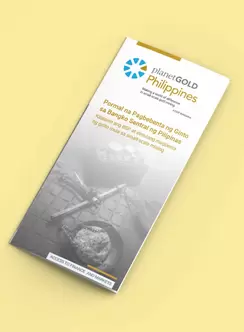
The brochure intends to encourage small-scale miners to sell gold to the BSP and its authorized representatives. It contains the advantages of selling gold formally, the basic information about the BSP, and its gold-buying conditions.
The brochure introduces a standard set of criteria for conformance of the SSM organizations under the planetGOLD program. It contains the summary of modules based on the CRAFT Code and the planetGOLD-specific criteria as per the GEF Environment and Social Safeguards requirements.
The Conflict-Free Gold Standard provides a mechanism by which gold producers can assess and provide assurance that their gold has been extracted in a manner that does not cause, support or benefit unlawful armed conflict or contribute to serious human rights abuses or breaches of international humanitarian law.
This guide is intended to share some of the learnings and best practices in the hope that this will further encourage greater participation and engagement with women at gold mining operations and in the communities that support these operations.







Knowledge areas: