A presentation conducted by the planetGOLD Colombia project team and Alliance for Responsible Mining focused on the implementation of the planetGOLD Critiera and CRAFT Code while working with a small-scale mining operation. The recording of the session is available here: planetGOLD Colombia and Alliance for Responsible Mining presentation
Artisanal and small-scale gold mining (ASGM) is often associated with environmental degradation, workers’ exploitation, unsafe practices and even conflict. However, the sector is also a source of employment and local economic development in some of the world’s most deprived areas, where few alternatives exist. Few are aware of these benefits, but effective communications can help provide a more balanced view. This issue brief summarizes an analysis of the state of play in ASGM communications (including barriers to effective communication) and emerging trends, along with recommendations aimed at communicators and decision-makers.
A presentation by the planetGOLD Colombia project team and the Alliance for Responsible Mining focused on the application of planetGOLD Critiera and the CRAFT Code when working with small-scale mining.
The 2019/2020 Annual Progress Report published by planetGOLD provides an overview of the progress made since the launch of the planetGOLD programme in early 2019 and includes data from the initiation of each of the national projects through fall 2020. This executive summary provides a snapshot of the key points from the full report, across the programme's 4 key programmatic areas: formalization, access to finance, technical solutions, and access to formal markets.
An introduction to the planetGOLD Criteria as presented by the planetGOLD Philippines project. This training was delivered to both representatives from government agencies and the mining community.
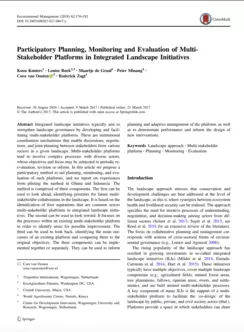
Koen Kusters, Louise Buck, Maartje de Graaf, Peter Minang, Cora van Oosten, Roderick Zagt
English
Integrated landscape initiatives typically aim to strengthen landscape governance by developing and facilitating multi-stakeholder platforms. Multi-stakeholder platforms tend to involve complex processes with diverse actors, whose objectives and focus may be subjected to periodic reevaluation, revision or reform. This article proposes a participatory method to aid planning, monitoring, and evaluation of such platforms, and we report on experiences from piloting the method in Ghana and Indonesia.
The purpose of this analysis is to compare what was planned for in the CMEP with what was achieved and what could have been done differently to serve as a learning for other Projects.



Countries: