Gisèle Eva Côté, Henri A. Nzedom, and Kady Seguin
English
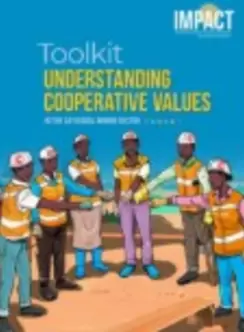
This toolkit engages cooperatives and their members in conversations around six fundamental cooperative values: self-help, self-responsibility, democracy, equality, equity, and solidarity.
Olinda Orozco Zevallos; Guadalupe Eto Chero; y Franco Arista Rivera
Spanish
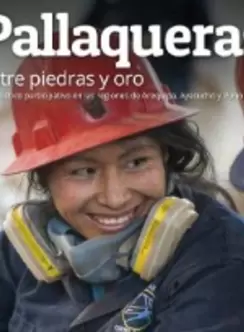
Este documento es un diagnóstico participativo sobre la situación socioeconómica y laboral de las "pallaqueras" (mujeres seleccionadoras de mineral) en las regiones de Arequipa, Ayacucho y Puno.
In Peru’s ASGM sector, women miners are converting awareness into influence through Solidaridad’s REVALORO initiative. The grassroots National Network of Women Miners (RNM-MAPE) is now shaping public policy, driving collective action, and inspiring new gender-equity standards in responsible gold value chains.
Ministerio de Ambiente y Energía, Costa Rica
Spanish
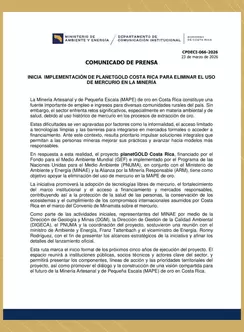
Como parte de las actividades iniciales, representantes del MINAE por medio de la Dirección de Geología y Minas (DGM), la Dirección de Gestión de la Calidad Ambiental (DIGECA), el PNUMA y la coordinación del proyecto, sostuvieron una reunión con el ministro de Ambiente y Energía, Franz Tattenbach y el viceministro de Energía, Ronny Rodríguez, con el fin de presentar los alcances estratégicos de la iniciativa y afinar los detalles del lanzamiento oficial.
Esta ruta marca el inicio formal de los próximos cinco años de ejecución del proyecto. El espacio reunirá a instituciones públicas, socios técnicos y actores clave del sector, y permitirá
Secretariat of the Minamata Convention on Mercury
English
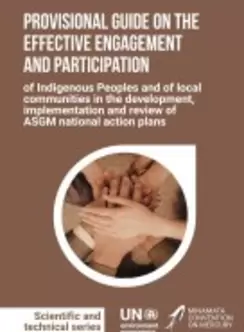
The aim of this guide is to reflect the existing best practices for engagement of Indigenous Peoples and for engagement of local communities in response to decision MC-5/7 paragraph 7.
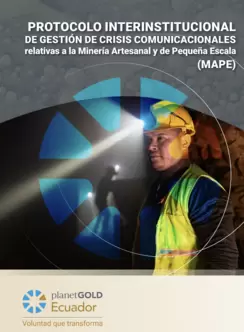
El presente documento contiene una propuesta inicial de protocolo de gestión de crisis comunicacionales en el sector de la minería artesanal y de pequeña escala (MAPE), como un aporte de planetGOLD a sus aliados y contrapartes en esta fase de ejecución del proyecto. Esto, desde la conciencia de la complejidad que reviste la comunicación sobre temáticas relativas a la MAPE, especialmente en el contexto y coyuntura actuales.
United Nations Environment Programme ,
Minamata Convention on Mercury
English
This report was developed in response to decision MC-4/4 by the Conference of the Parties to the Minamata Convention on Mercury, at its fourth meeting, where it requested the Secretariat “to compile views on the needs and priorities of indigenous peoples and local communities with regard to the use of mercury in artisanal and small-scale gold mining”.
N. Raoilimanantsoa , J. Oremo , O. Akello , W. Majanga , S. Gunter , G. Ayodo , M.Torkmahalleh and S.Dorevitch
English
While there is data around concentrations of metals in surface waters near ASGM activities, little is known about concentrations of metals in the water-ore-mercury slurry with which workers have extensive dermal contact. The authors of this publication seek to characterize those concentrations.



Knowledge areas: