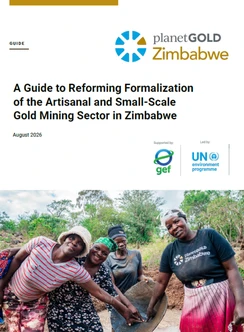
A Guide to Reforming the Formalization of the Artisanal and Small-Scale Gold Mining Sector in Zimbabwe provides a structured roadmap for the transformation of artisanal and small-scale gold mining (ASGM) from a predominantly informal survivalist economy into a regulated, productive, and environmentally responsible sector.
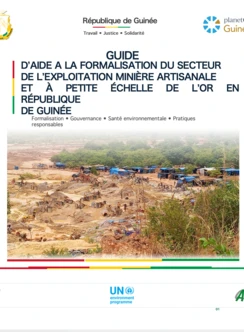
Élaboré dans le cadre du projet planetGOLD Guinée, ce Guide constitue un outil pratique destiné aux artisans miniers, aux services techniques et aux autres acteurs de l’exploitation minière artisanale et à petite échelle de l’or (EMAPE). Il présente les principales démarches de formalisation ainsi que les exigences juridiques, administratives, techniques, environnementales, sociales et financières à prendre en compte pour promouvoir une exploitation aurifère mieux organisée, plus sûre, responsable et respectueuse de l’environnement.
Understanding linkages between ASGM and biodiversity is key for sound implementation of relevant Multilateral Environment Agreements and the Kunming-Montreal Global Biodiversity Framework. Using visuals this fact sheet shows the stages where biodiversity is impacted by ASGM along with solutions.
Building off the literature that focuses on conflict between Indigenous communities and mining operations, this study focuses on understanding the magnitude of operations' financial costs, their distribution across functions, and the potential for proactive engagement to reduce such impacts.
This applied guidebook culminates a decade of work to develop, innovate, and implement Pact’s Children Out of Mining approach alongside communities in and around Kolwezi, Lualaba Province, in the southern Democratic Republic of Congo’s (DRC) Copperbelt from 2016 to 2025. This guidebook is available in English and French.




Knowledge areas: