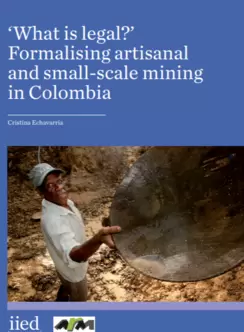
Colombia’s mining sector is characterised by widespread informality, with two-thirds of all mining operations lacking any legal title. This not only prevents improvement in the working conditions and human rights of miners, but perpetuates environmental degradation and poor quality of life in mining communities. This paper assesses these past formalisation processes, analysing the barriers to formalisation for artisanal and small-scale mining (ASM) and offering approaches to overcome them.
Prepared for the International Institute for Environment and Development (IIED).
Now, as national and global drivers align to make this a time of possibility for inclusive ASM formalisation, we examine current barriers, opportunities and learnings to recommend policy-level action. This publication forms part of IIED’s work to identify pathways towards inclusive and responsible mining.
Prepared for the International Institute for Environment and Development (IIED).
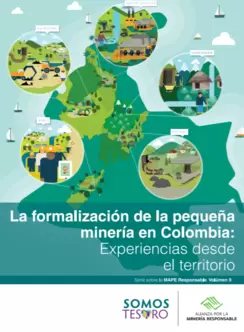
Ahora que los factores nacionales y globales están alineados para crear el momento ideal para la formalización incluyente de la MAPE, analizamos aquí los obstáculos, las oportunidades y los conocimientos actuales, con el fi n de recomendar una acción de carácter político.
Prepared for the International Institute for Environment and Development (IIED).
This report developed to provide an overview of the illegal and illicit trade of mercury in Indonesia as a case study for HEJ Support, contributing to the Illegal and Illicit Trade of Chemicals prepared by GRID Arendal and UNEP. The report provides the brief overview on the dynamics of mercury supply and trade in Indonesia, mercury suppliers and vendors, mercury pricing and labelling, and trade platform/mechanism.
Cremers, Leontien; Kolen, Judith; Theje de, Marjo
English
In this book the authors give a situation analysis of small-scale gold mining in five countries in the wider Amazon region. This work comes from a base line study that is part of the GOMIAM project (Small-scale gold mining and social conflict in the Amazon: Comparing states, environments, local populations and miners in Bolivia, Brazil, Colombia, Peru and Suriname).
Cartier, E. Laurent; Ali, H. Saleem; Krzemnicki, S. Michael
English
This article provides an overview of current trends and developments in the tracking and traceability of gems, along with an explanation of the terms used in this context.
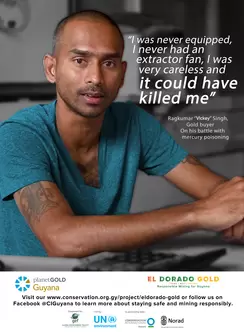
The planetGOLD Guyana team created these posters to raise awareness using the voices of miners discussing the need for safer, more responsible mining practices based on their own experience and perspective.
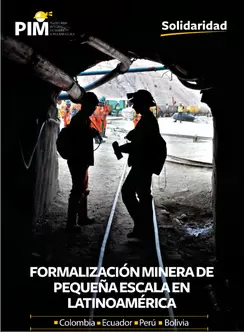
Banda, E. Ramón; Franco Arista, F.; Jaramillo, Martín para Solidaridad
Spanish
This publication addresses the formalization processes and the differentiation of illegal mining activities in Colombia, Ecuador, Peru and Bolivia that are crucial to ensure responsible mining.
Artisanal Gold Council and Asia Pacific Economic Cooperation
Spanish
Este plan de capacitación fue creado como parte del proyecto Desarrollo de materiales didácticos para promover la reducción del uso de mercurio en la minería de oro artesanal y en pequeña escala. Este plan tiene como objetivo ayudar a la capacitación de los mineros de oro artesanal y en pequeña escala, para que desarrollen habilidades empresariales fundamentales. Estos materiales didácticos están diseñados para ser de “libre acceso”, es decir, para que puedan ser usados gratuitamente por programas, organizaciones e instituciones que trabajen en el sector de minería de oro artesanal y en pequeña escala.



Knowledge areas: