This document summarizes the environmental and occupational health hazards and adverse health outcomes associated with ASGM. Special considerations for women and children are also explored.
Overview of guidance for preparing an artisanal and small-scale gold mining National Action Plan to fulfill obligations under Article 7 of the Minamata Convention on Mercury
The guide provides an overview of the current state of knowledge on mercury supply, demand and trade. Furthermore, it aims to familiarize the reader with the provisions relevant to mercury trade in the Minamata Convention. Finally, it suggests practical steps to understand mercury trade at the national level and recommends approaches to developing the National Action Plan strategy to manage mercury trade in ASGM.
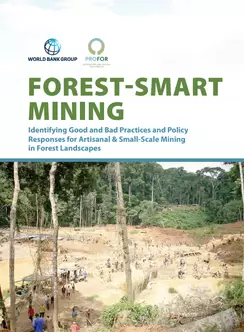
This report reviews existing knowledge and experience around mining in forested landscapes. It focuses on artisanal and small-scale mining (ASM). It analyzed several active ASM mine sites as case studies to identify good and bad practices for forest-smart mining and the conditions and mechanisms that motivate these practices.
ONU medio ambiente,
Artisanal Gold Council
Spanish
Este manual y kit de herramientas han sido diseñado para ayudar a los gobiernos, organizaciones civiles y el sector privado de los distintos países en la preparación de un Plan de Acción Nacional (PAN) para reducir el uso de mercurio en la minería de oro artesanal y en pequeña escala (MAPE), de acuerdo con los requerimientos para las Partes que cumplen las condiciones estipuladas en el artículo 7 del Convenio de Minamata sobre el Mercurio.
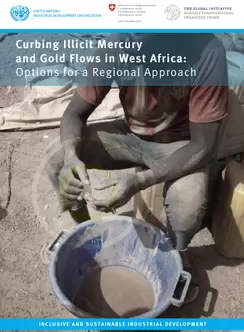
Recognizing the need for a greater understanding of mercury and gold trade flows, regulation and taxation, the UN Industrial Development Organization (UNIDO) commissioned this study of mercury and gold trade flows and regulatory frameworks. The study was informed by extensive desk research and key informant interviews conducted in 12 ECOWAS member states (Benin, Burkina Faso, Côte d’Ivoire, Ghana, Guinea, Liberia, Niger, Nigeria, Mali, Sierra Leone, Senegal and Togo.) Gambia was also included in desk research.
Ce guide pratique a été conçu pour aider les gouvernements, les organisations de la société civile et le secteur privé des pays concernés à élaborer un Plan d’action national (PAN) visant à réduire l’utilisation du mercure dans le secteur de l’extraction minière artisanale et à petite échelle d’or (EMAPE), conformément aux exigences de l’Article 7 de la Convention de Minamata sur le mercure.
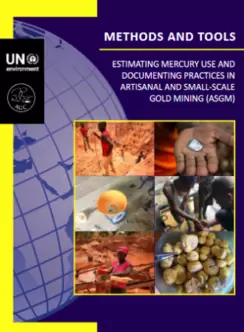
This guidebook and toolkit have been designed to assist governments, civil-society organizations, and the private sector of countries in preparing a National Action Plan for reducing mercury use in artisanal and small-scale gold mining
This document was produced in the framework of the project entitled: “Contributing to the preparation/implementation of the Minamata Convention on Mercury, with a focus on developing strategies for phasing out mercury-added products and on reducing mercury use in Artisanal and Small Scale Gold Mining through development of National Action Plans.”



Knowledge areas: