The interaction between large-scale mining companies and artisanal and small-scale mining (ASM) operations has not always been positive, and encounters between the two sectors are increasing. There are a number of ASM sustainable development challenges – including security, human rights and relocation programs – that can require specific ASM consideration.
This report series analyzes the forces behind illegal mining in Ghana, its geographic expansion, and the networks that benefit from it. Drawing on three years of fieldwork, remote sensing, interviews, and desk research, Part 1 focuses on the Western and Savannah regions, showing how unlicensed artisanal and small-scale gold mining has increased in scale, sophistication, and environmental and social impact. Part 2 will delve further into the illicit gold supply chains and financial systems that sustain the trade.
Estelle Levin Ltd. prepared this report by drawing on best practices of rehabilitation approaches for ASM, using international case studies that illustrate real-world rehabilitation methods that can be applied to ASM in Mongolia.
This handbook is the result of a training session which took place in Maputo, Mozambique from 26 to 30 September 2022, with participants from 16 countries in Southern African Region. This training aimed at building capacity in the Geological Surveys of the African continent in matters related to the assessment and management of mineral resources, use and sustainable land development, mitigation of natural risks and environmental protection.
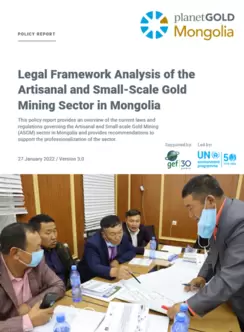
This policy report provides an overview of the current laws and regulations governing the Artisanal and Small-scale Gold Mining (ASGM) sector in Mongolia and provides recommendations to support the professionalization of the sector.
Yves Bertran Alvarez; Josephine Singo; Alliance for Responsible Mining - for planetGOLD
EnglishFrenchSpanish
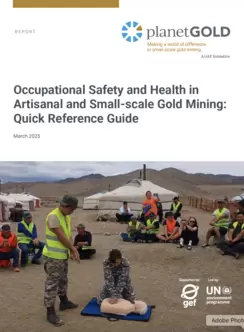
This guide focuses on occupational safety and health (OSH) issues related to artisanal and small-scale mining, with an emphasis on gold mining. Addressing OSH risks improves worker well-being, enhances productivity, and encourages responsible mining practices. However, challenges such as insufficient data, lack of infrastructure, and the need for gender-responsive interventions, mean that OSH measures are usually not fully implemented in the artisanal and small-scale gold mining (ASGM) sector.
This quick reference guide is intended for managers of projects working with mine operations, as well as mine operators themselves, who want to improve
Cristian Arias and Kamila Gómez, Alliance for Responsible Mining
English
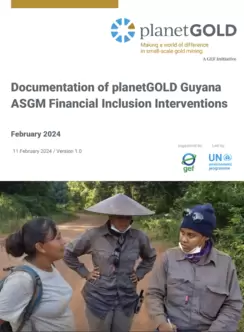
This case study documents the finance models implemented by the planetGOLD Guyana project in artisanal and small-scale gold mining (ASGM) communities, with a consideration of the gender aspects of the projects.
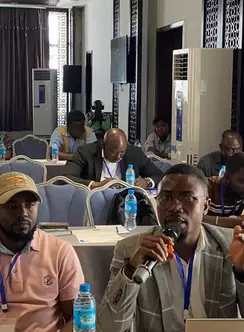
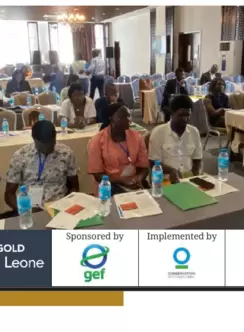
On 28 October 2025, the planetGOLD Sierra Leone Project brought together representatives from commercial banks, community banks, microfinance institutions, government ministries and regulatory agencies with a stake in ASGM, and the private sector, for a workshop at the Atlantic Lumley Hotel in Freetown. The workshop aimed to strengthen the capacity of financial institutions in Sierra Leone to support the formalization and sustainable development of the Artisanal and Small-scale Gold Mining (ASGM) sector through increased access to finance. The specific objectives were to: Inform financial service providers and investors about opportunities in
Social and environmental harm continues to emanate from global commodity production despite the array of governance programs trying to mitigate it. This paper examines the evolution of transnational certification standards in an understudied sector: artisanal and small-scale gold mining (ASGM).



Knowledge areas: