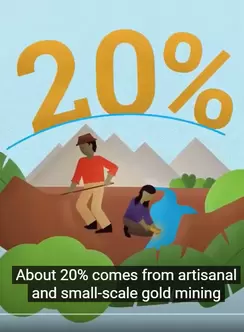
Most of us come in contact with gold on a daily basis. About 20% of that gold comes from millions of artisanal and small-scale gold miners around the world, whose livelihoods depend on this activity. But due to a lack of awareness or alternatives, many of these operations use toxic mercury to extract their gold.
National Environment Management Authority (NEMA) - Uganda
English
The National Action Plan (NAP) for Artisanal and Small Scale Gold Mining (ASGM) details Uganda’s commitment to reducing and where feasible eliminating mercury use in the ASGM sector which includes specific, realistic and time-bound objectives, strategies and interventions including anticipated key institutions for realising the commitment.
The planetGOLD Mongolia project was launched in 2019 and will continue until the end of 2023. The project contributes to the elimination of mercury in artisanal and small-scale gold mining (ASGM) and enhancing formalization of the sector. The project is a part of the planetGOLD Programme and to learn more, watch the full interview with Mongolian National Project Manager, Altanbagana Bayarsaikhan.
This report assesses the communication and awareness raising related interventions of the planetGOLD Kenya project. Strategic, inclusive communication and awareness raising practices play a critical role in educating miners and communities with artisanal and small-scale mining activities, while also helping build greater public support for transforming the ASGM sector with responsible, mercury-free mining practices.
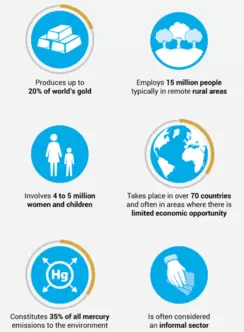
This infographic features a visual summary of the key facts and figures about ASGM. It provides answers to questions such as: Why is it hard to formalize the sector; Why is mercury used in ASGM; How does the Minamata Convention safeguard the ASGM sector? Key strategies through which the planetGOLD programme is transforming the sector are also presented.
Featuring highlights from the July 2019 launch event for the GEF GOLD (now called planetGOLD) project in Colombia, this video gives an overview of the project's objective to support 11 artisanal and small-scale gold mining (ASGM) municipalities to reduce mercury use by 20 tonnes over the course of the 5-year project.
The Environmental Health and Pollution Management Program (EHPMP) addresses environmental health challenges associated with mercury use in artisanal small-scale gold mining and e-waste, and environmental health challenges associated with unintentional Persistent Organic Pollutants. Funded by the Global Environment Facility, it is implemented in Ghana, Kenya, Senegal, Tanzania, and Zambia.
Swiss Agency for Development and Cooperation
English
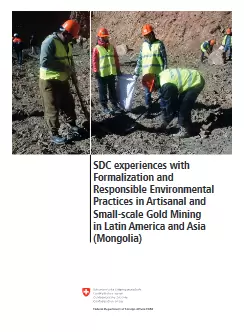
The present paper summarizes the lessons learnt by SDC and its cooperation partners at governmental, institutional and community level during the past two decades. It is dedicated to the millions of artisanal miners and their families who deserve a life in dignity, and intended as a contribution to the common global goal of reducing mercury emissions.
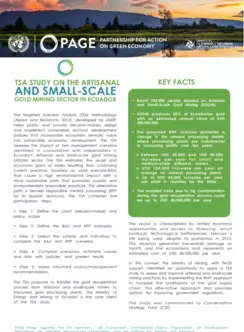
With the aim of reducing the use of hazardous chemicals in the gold recovery process in artisanal mining, UNDP Ecuador and PAGE conducted a study revealing significant gains that artisanal miners, processing plants, laboratories and the state could have if the gold recovery process were transferred to small-scale mining plants with appropriate, mercury-free processes. Read the key results in this fact sheet.
planetGOLD Mongolia project updates in the first quarter of 2022
It is a pleasure to meet all of you with the first edition of the newsletter from planetGOLD Mongolia. We are working towards the formalization and professionalization of the artisanal and small-scale gold mining (ASGM) sector in Mongolia, including the elimination of mercury use in gold processing. We are working with various stakeholders along the gold supply chain – miners, gold traders, local and national governments as well as civil society – to sustainably improve artisanal mining operations as an important livelihood opportunity for remote communities and to support the






Knowledge areas: