The planetGOLD Guyana project is supporting Guyana with the move towards reducing and eliminating, where possible, the use of mercury in ASGM sector. Here we meet up with one small miner from Region 8 in Guyana, South America where he shares his knowledge on the dangers or mercury and his experience as a miner.
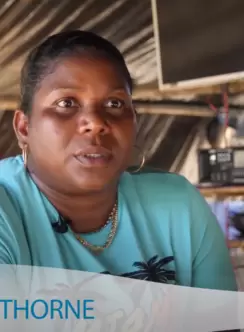
The planetGOLD Guyana project is supporting Guyana with the move towards reducing and eliminating, where possible, the use of mercury in ASGM sector. Here we meet up with one small scale woman miner from Region 8 in Guyana, South America where she shares her knowledge on the dangers or mercury and her experience as a miner.
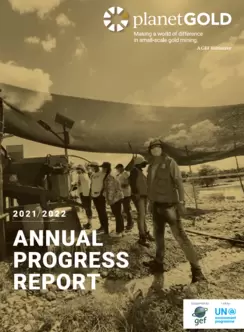
This report documenting planetGOLD’s progress from July 2021 through June 2022 shows how project teams in planetGOLD made key advances toward helping miners go mercury-free, by improving miners’ awareness of the dangers of mercury use, educating and demonstrating to them viable technical alternatives, and progressing in creating an enabling regulatory and financial environment that supports miners to undertake this transition.
Pedro Gasparinnetti, Leonardo Barcellos Bakker, Julia Mello Queiroz, Thais Vilela
English
This study develops a framework for calculating the economic costs associated with the negative environmental and social impacts of ASGM in the Brazilian Amazon. Based on a literature review on impact valuations of deforestation, land degradation, and mercury contamination, the authors use multiple parameters to develop a generalizable value transfer formula. The study additionally proposes an enhancement to the model used by Bakker et al. (2021) for estimating mercury impacts on human health.
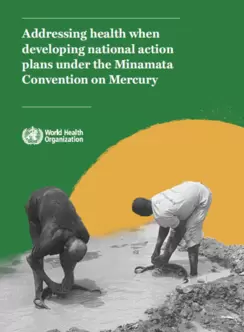
This document provides an approach to addressing health as part of the development of a National Action Plan (NAP) to reduce, and where feasible, eliminate mercury use as required under the Minamata Convention on Mercury.
Under the Convention, NAPs are a requirement for those Parties that determine that “artisanal and small-scale gold mining (ASGM) and processing in its territory is more than insignificant.” A NAP must include public health strategies on the exposure of artisanal and small-scale gold miners and their communities to mercury. Such strategies are expected to include gathering health data, training of health care workers, and
This tool is the systematization of the pedagogical module for the training of mining communities in clean production, techniques to eliminate the use of mercury and a gender approach in the ASGM sector.




Countries: