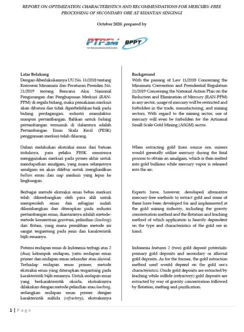
With the passing of Law 11/2018 Concerning the Minamata Convention and Presidential Regulation 21/2019 Concerning the National Action Plan on the Reduction and Elimination of Mercury (RAN-PPM) in any sector, usage of mercury will be restricted and forbidden in the trade, manufacturing, and mining sectors. With regard to the mining sector, use of mercury will even be forbidden for the Artisanal Small-Scale Gold Mining (ASGM) sector.
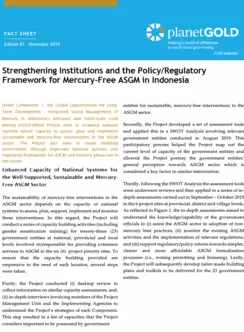
Under Component 1, the Global Opportunities for Long-Term Development – Integrated Sound Management of Mercury in Indonesia’s Artisanal and Small-Scale Gold Mining (GOLD-ISMIA) Project aims to establish national systems whose capacity to assess, plan and implement sustainable and mercury-free interventions in the ASGM sector. The Project also aims to create enabling environment through improved national policies and regulatory frameworks for ASGM and mercury phase-out in the sector.
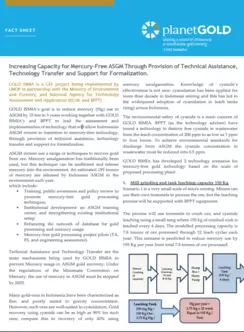
GOLD ISMIA’s goal is to reduce mercury (Hg) use in ASGM by 15 ton in 3 years working together with GOLD ISMIA’s and BPPT to lead the assessment and implementation of technology that will allow Indonesian ASGM miners to transition to mercury-free technology through provision of technical assistance, technology transfer and support for formalization.
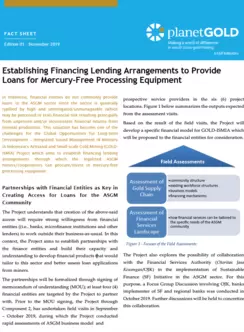
In Indonesia, financial entities do not commonly provide loans to the ASGM sector since the sector is generally typified by high and unmitigated/unmanageable (which may be perceived or real) financial risk resulting principally from unproven and/or inconsistent financial returns from mineral production. This situation has become one of the challenges for the Global Opportunities for Long-term Development – Integrated Sound Management of Mercury in Indonesia’s Artisanal and Small-scale Gold Mining (GOLDISMIA) Project which aims to establish financing lending arrangements through which the legalized ASGM miners/cooperatives can procure/invest
The document presents data and information conducted by the planetGOLD Philippines in January to June 2021, focusing on the Project’s selected Minahang Bayan (People's Mining Area) areas in Sagada, Mt. Province and Paracale, Camarines Norte.
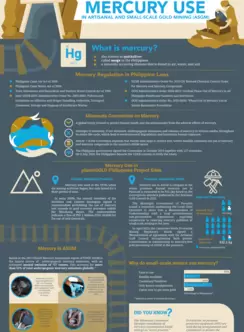
The infographic provides a view of mercury's impact on health and the environment, while also detailing relevant laws governing its use. It visually maps the journey of mercury from industrial sources to aquatic ecosystems, illustrating associated risks to marine life and human health. It also details how mercury is used in artisanal and small-scale gold mining.
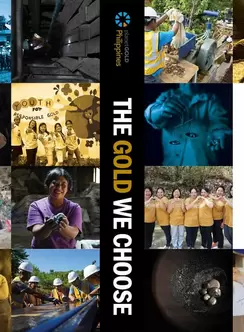
The Gold We Choose explores the legacy of the planetGOLD Philippines Project, capturing its milestones, partnerships, and the lives it has transformed. Through compelling stories from the ground, striking images of change, and the voices of miners, leaders, and communities, this book honors a sector often overlooked, yet vital to both local and national economies.
More than a record of achievements, it is a powerful testament to what becomes possible when people come together to build a small-scale gold mining industry that is mercury-free, safer, cleaner, and truly inclusive.
From the mining tunnels of Paracale to the highlands of Sagada, this
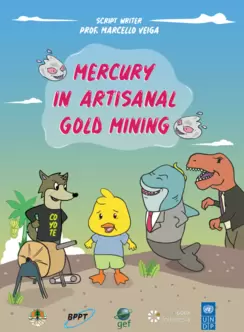
What is mercury, and what can happen if you are exposed to it? In this comic book created by the planetGOLD Indonesia project with a script by Professor Marcello Veiga, these topics and more are explored through animated characters teaching young audiences fundamental truths about the dangers of mercury in ASGM and how they can avoid it.
The Minamata Convention on Mercury is a global treaty to protect human health and the environment from the adverse effects of mercury. The website of the Secretariat of the Minamata Convention provides links to the text of the Convention, as well as information on parties, meetings, and additional documentation.
Samuel J. Spiegel, Sumali Agrawal , Dino Mikha , Kartie Vitamerry , Philippe Le Billon , Marcello Veiga , Kulansi Konolius, Bardolf Paul
English
This article discusses implications of domestic cinnabar mining for controlling mercury in Indonesia's ASGM sector, highlighting obstacles to implementing the Minamata Convention, a treaty that aims to restrict mercury use. We link discussion of mercury mining to other socioeconomic processes, labour relations and power dynamics shaping mercury use in gold mining and hindering collectivised mercury-free technology uptake.



Countries: