Environment Protection Agency - Sierra Leone
English
The goal of Sierra Leone's National Action Plan (NAP) is to formalize, sensitize and assist miners, traders, their communities and other relevant stakeholders in an inclusive and comprehensive manner, in order to mitigate the sector’s negative social, environmental and health impacts and to unlock the sector’s full development potential. The reduction of mercury use and the mitigation of its harmful impacts are among the NAP’s key priorities.
This document has been designed to help guide the training of Artisanal and Small-Scale Gold Miners (ASGM) on retort use and mercury exposure reduction. This guide is not meant as an exhaustive document on all retort types and their uses. It provides guidance for individual miners and mining communities, and for agencies implementing retort distribution programs or retort training.
“Awareness-raising strategies to avoid the use of mercury in artisanal and small-scale gold mining” is a document that systematizes and analyzes the awareness-raising activities carried out by the planetGOLD Peru project between 2020 and 2024. The document highlights lessons learned and strategies that allow for fine-tuning future initiatives linked to awareness-raising in localities where artisanal and small-scale gold mining is practiced. También disponible en español.
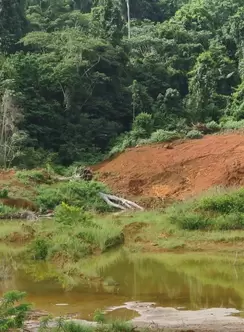
After ASGM operations cease or move to new locations, tailings are often discarded without proper stabilization or containment measures. Such activity poses a risk to the environment and human health, especially if tailings contain residual mercury (or other toxic materials). View the collection of resources curated by planetGOLD and visit our Voices section to read more about the dangers of tailings.
Curated collections include some of the most useful and relevant resources on key ASGM topics, selected by the planetGOLD team. Click here to view all of the collections.
Evan N. Dethier; Miles R. Silman; Luis E. Fernandez; Jorge Caballero Espejo; Sarra Alqahtani; Paúl Pauca; David A. Lutz
English
This work provides an environmental analysis of policy enforcement that includes long-term monitoring of mining activity and recovery, with findings relevant to policymakers in Amazonian countries and around the world experiencing increases in alluvial gold mining.
This report examines child labor and exposure to mercury in small-scale gold mining in Tanzania, Africa’s fourth-largest gold producer. It documents the harmful effects of mining on children, including its impact on the enjoyment of their rights to health, education, and protection from violence and abuse. The report focuses on hard rock mining, whereby small-scale miners remove and process rocks from pits to extract the ore. Human Rights Watch conducted research in Chunya district (southern Tanzania), in Geita and Kahama districts (northwestern Tanzania), and in the cities of Dar es Salaam, Mwanza, and Mbeya.
This guide offers a detailed look at the fundamental aspect of gravity separation, from the installation and operations of plants to the operational management and safe equipment use. Additionally, it addresses the physical properties of gold that make gravity separation effective, describes the technology used in each phase of the recovery circuit and details the ideal conditions of the ore before the mixing stage. The aim of this guide is to empower artisanal and small-scale miners, facilitating access to a cleaner, more profitable, and environmentally responsible form of mining.


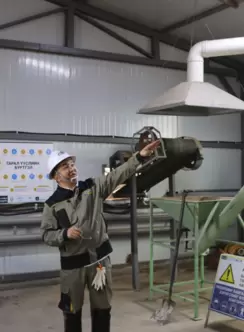
 • planetGOLD Монгол төслийн алтны хүдэр баяж...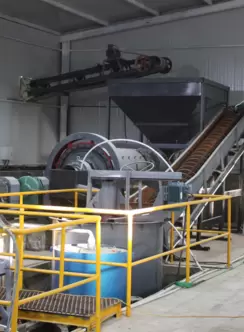
Knowledge areas: