

Our Mission:
To make small-scale gold mining safer, cleaner, and more profitable
Our Vision:
A clean global supply of gold from small-scale miners
The planetGOLD programme works in partnership with governments, the private sector, and ASGM communities to significantly improve the production practices and work environment of artisanal and small-scale miners. By working to close the financing gap, supporting formalization, raising awareness, and connecting mining communities with mercury-free technology and formal markets, the programme aims to demonstrate a pathway to cleaner and more efficient small-scale gold mining practices that benefit everyone, from mine to market.
Supporting countries’ commitments under the Minamata Convention on Mercury, the planetGOLD programme is working to eliminate mercury from the supply chain of gold produced by artisanal and small-scale miners by:

Supporting efforts to integrate the ASGM sector into the formal economy, society, and regulatory system | 
Introducing and facilitating access to mercury-free technologies and best practices in ASGM |

Facilitating miners’ access to formal gold supply chains, in partnership with gold buyers and industrial users | 
Piloting a range of models for access to investment and finance for small-scale miners and their communities |
The Opportunity
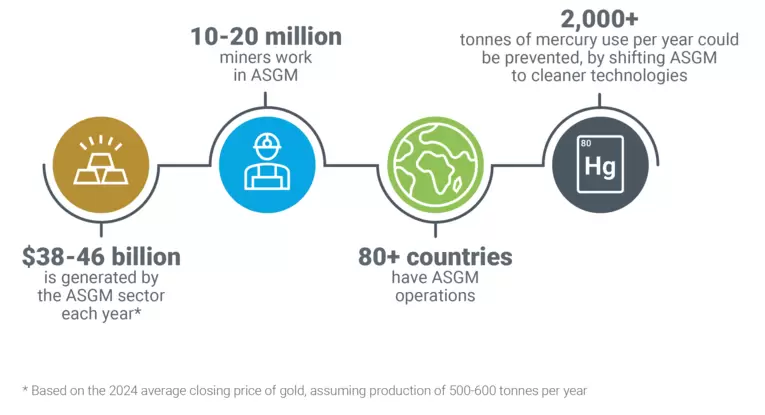
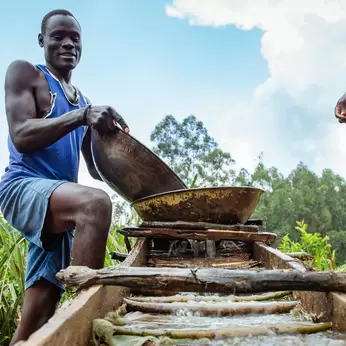
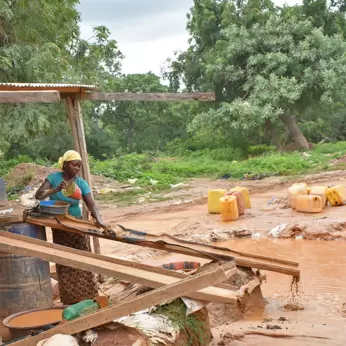
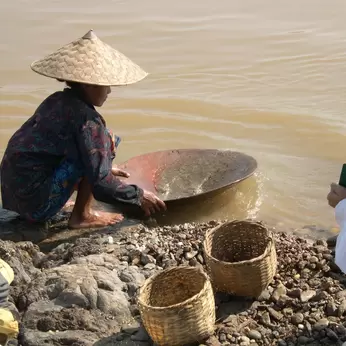
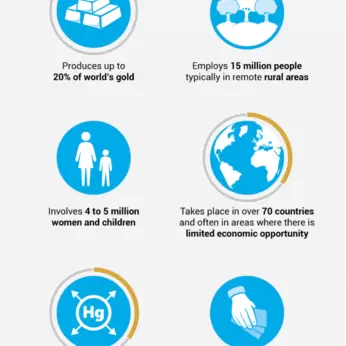
Artisanal and small-scale miners are responsible for producing 20 percent of the world’s gold each year. Due to limited economic opportunities or a lack of awareness about the dangers, many of these small-scale mining operations use the highly toxic chemical mercury to extract their gold, making this sector the largest source of mercury pollution in the world. This 3,000-year-old method for processing gold is leading to grievous environmental and health consequences.
The planetGOLD programme recognizes the opportunity that exists to upgrade the practices of 10-20 million small-scale miners—sustainably boosting their productivity while improving the gold supply chain and significantly reducing global mercury pollution. Transforming the artisanal and small-scale gold mining (ASGM) sector has the potential to inject new capital into local economies and improve the lives of more than 100 million people, who rely on this industry directly or indirectly for their livelihood.
Programme Criteria
The planetGOLD programme sets out specific criteria to govern the operations of ASGM entities engaged with the programme. These planetGOLD Criteria for Environmentally and Socially Responsible Operations are designed to ensure that artisanal and small-scale miners participating in the planetGOLD programme undertake sufficient efforts to avoid, minimize, mitigate, and where appropriate, offset adverse impacts to people and the environment.
The planetGOLD Criteria align with the requirements of the Minamata Convention on Mercury, the GEF Environmental and Social Safeguards, the OECD Due Diligence Guidance for Responsible Supply Chains of Minerals from Conflict-affected and High-Risk Areas, and the Code of Risk Mitigation for ASGM engaging in Formal Trade (CRAFT). These requirements focus on protection of human rights and avoidance of corruption, and planetGOLD's Criteria additionally specify that operations should operate without the use of mercury, respect the rights of Indigenous Peoples, and mitigate impacts on biodiversity. To learn more, visit the planetGOLD Criteria page.
Who We Are
Supported by the Global Environment Facility, planetGOLD is led by the United Nations Environment Programme and implemented in partnership with the United Nations Industrial Development Organization, United Nations Development Programme, and Conservation International.
The first phase of the planetGOLD programme was executed by government agencies and other organizations in Burkina Faso, Colombia, Ecuador, Guyana, Indonesia, Kenya, Mongolia, Peru, and the Philippines from 2018 to 2026. Explore an in-depth analysis of this initial phase of the programme.
In 2020, the Council of the Global Environment Facility approved the expansion of the planetGOLD programme to eight new countries: Bolivia, Republic of the Congo, Ghana, Honduras, Madagascar, Nigeria, Suriname, and Uganda. In 2021, the GEF further approved the addition of Côte d’Ivoire, Guinea, Mali, Nicaragua, Sierra Leone, and Zambia – and also approved the formal addition of Ecuador. Subsequently, the GEF approved additional projects in Costa Rica, Paraguay and Zimbabwe, and there is currently a project under development in Senegal — bringing the planetGOLD programme to a total of 27 countries.
The programme also includes a global knowledge management and communications project, which facilitates the dissemination of information from planetGOLD to mining stakeholders and communities, government, and civil society.
Knowledge areas: