The purpose of this compilation and analysis of Conservation on Biological Diversity (CBD) decisions and recommendations is to support decision-makers, negotiators and advocates in monitoring the implementation of gender-sensitive and gender-responsive policies, programmes, and activities under the Convention.
A methodology developed by the IUCN to help implement a gender-responsive analysis for a wide range of partner institutions. Key questions are provided to uncover gender gaps and issues at local, institutional and national levels, as well as gendered differences in the distribution of benefits, risks and opportunities.
GII is a composite metric of gender inequality using three dimensions: reproductive health, empowerment and the labour market. A low GII value indicates low inequality between women and men, and vice-versa.
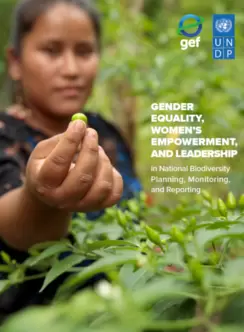
This publication provides seven entry points for mainstreaming gender into planning, monitoring, and reporting for revised or updated National Biodiversity Strategies and Action Plans (NBSAPs) that are aligned with the Kunming-Montreal Global Biodiversity Framework.
This capacity-building package has been designed for policymakers to guide them on how to promote gender equality across all levels of policy and programming in climate change, and to provide them with the necessary tools to do so.
The authors and the UNEP Secretariat provide in this assessment an overview of critical evaluations and analyses of the interlinkages between gender and the environment, and their importance for gender-sensitive policy-making and actions.
This Methodological Brief on Gender defines the approach of the UN-REDD Programme (UN-REDD) on gender equality and women’s empowerment, aiming particularly at the UN-REDD 2016-2020 Strategic Framework. It can also assist partner countries to realize the gender equality provisions contained in international agreements on REDD+, including on safeguards, as well as contribute to Sustainable Development Goal (SDG) #5 on gender equality.
The World Bank's Gender Data Portal makes the latest gender statistics accessible through compelling narratives and data visualizations to improve the understanding of gender data and facilitate analyses that inform policy choices.
This guide explores the impact of mining on developing nations and why a responsible approach is essential. The guide also discusses various strategies for promoting responsible mining practices and the benefits they can bring to both mining companies and local communities.
Este paquete de diapositivas se presentó durante un seminario web en julio de 2024 para proyectos nacionales planetGOLD en el que se ofreció una visión general de la financiación de los Planes de Acción Paisajísticos. Es el octavo de una serie de seminarios web sobre el Enfoque Jurisdiccional (JA) y el Enfoque Paisajístico (LA).



Topics: