
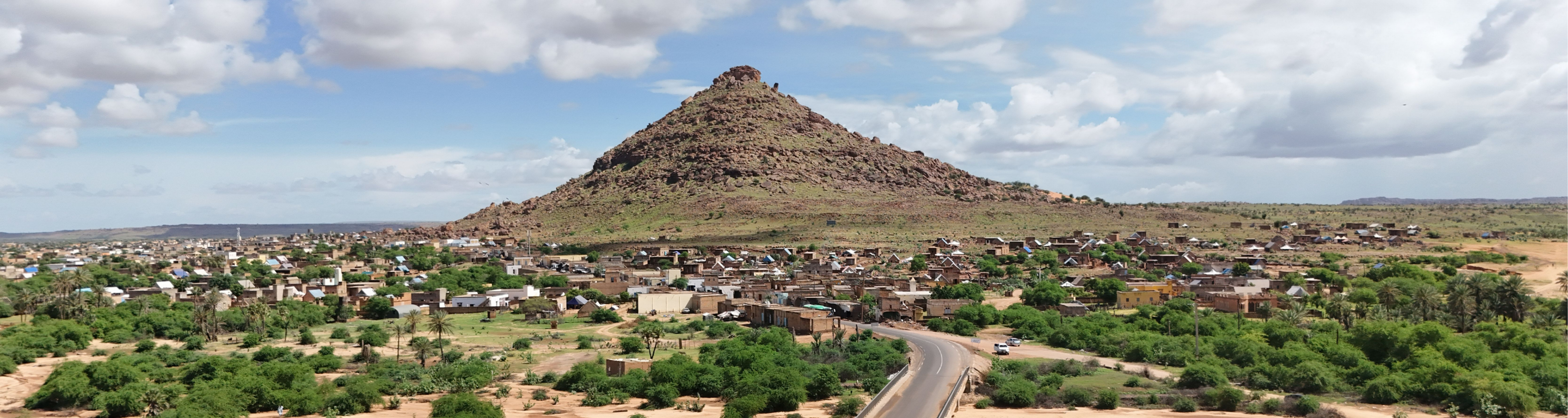

Renowned for its rich, deep history and powerful ancient empires, Mali became famous for its gold trade as far back as the 14th century. Today, gold remains a backbone of the country's economy.
Artisanal and small-scale gold mining (ASGM) is a vital pillar of Mali’s economy and an important source of livelihoods for rural communities. As one of Africa’s leading gold-producing countries, Mali relies on the ASGM sector to generate income and employment opportunities for hundreds of thousands of people. ASGM activities are concentrated particularly in the regions of Kayes, Koulikoro, and Sikasso, while mining activities continue to expand into other parts of the country.
Beyond its economic contribution, the sector plays a key role in supporting local development and enhancing the resilience of communities where alternative livelihood options are often limited. The sector employs an estimated 500,000 people directly and indirectly, including miners, processors, traders, transporters, and service providers. Roughly 60 percent of Mali’s population has no formal education, creating challenges for formalization and technology adoption in ASGM communities.
Women are actively involved throughout the ASGM value chain and contribute significantly to local economies. However, challenges remain in ensuring equitable access to resources, decision-making processes, and economic opportunities, highlighting the importance of inclusive approaches that promote gender equality and women’s empowerment.
Despite its socio-economic importance, much of Mali’s ASGM sector remains informal. Limited access to finance, insufficient technical support, weak traceability systems and gaps in regulatory implementation continue to hinder the sector’s sustainable development. Formalization has therefore become a national priority, offering a pathway to improved governance, enhanced environmental and social performance, greater economic benefits for miners, and access to responsible gold markets.
Mercury use remains one of the most significant environmental and health challenges associated with ASGM in Mali. According to the country’s National Action Plan for ASGM, approximately 33 tonnes of mercury are used annually in artisanal gold mining, despite legal restrictions on mercury use and trade. This continued use poses serious risks to miners, local communities, and ecosystems. Through its commitment to the Minamata Convention on Mercury, the implementation of the National Action Plan for ASGM, and the support of the planetGOLD Mali Project, the Government of Mali is taking concrete steps to reduce and ultimately eliminate mercury use.
Key Figures from Mali
-
500,000+ people are estimated to depend on ASGM for their livelihoods
-
4.3 tonnes of mercury are released to the environment from ASGM activities annually
-
26 tonnes of gold are produced annually by the ASGM sector
-
95% of mercury emissions are linked to gold mining activities
Mali's Approach
The planetGOLD Mali project aims to reduce and, where feasible, eliminate mercury use in the artisanal and small-scale gold mining sector by supporting formalization, increasing access to finance, promoting responsible gold production and trade, and accelerating the adoption of responsible mercury-free processing technologies.
The project also supports strengthened knowledge management, data collection, and information-sharing mechanisms to improve governance, enhance decision-making, and promote the sustainable development of Mali’s artisanal and small-scale gold mining sector.
The project's objective is to reduce 30.08 metric tonnes of mercury throughout the life of the project and to directly benefit approximately 50,000 artisanal and small-scale gold miners and community members across the targeted intervention areas.
The project will work directly with at least 50 cooperatives and 25 ASGM organizations to promote formalization, mercury reduction, and responsible mining practices. Particular attention will be given to promoting the participation and economic empowerment of women in the ASGM sector, with women expected to represent approximately 30 percent of direct beneficiaries.
Key Strategies

Optimize formalization of | 
Promote financial inclusion and |

Accelerate adoption of | 
Share knowledge and support |
Resources
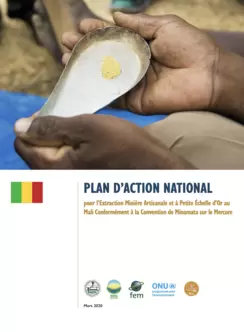
Plan d’Action National pour l’Extraction Minière Artisanale et à Petite Échelle d’Or au Mali Conformément à la Convention de Minamata sur le Mercure (1072)
Ministère de l’Environnement, de l’Assainissement et du D.veloppement Durable du Mali French
Countries:
Other planetGOLD countries
planetGOLD project sites in Mali