
News
26 April 2024
Knowledge Areas:
Countries:
-
 National Communications Specialist - planetGOLD Mongolia
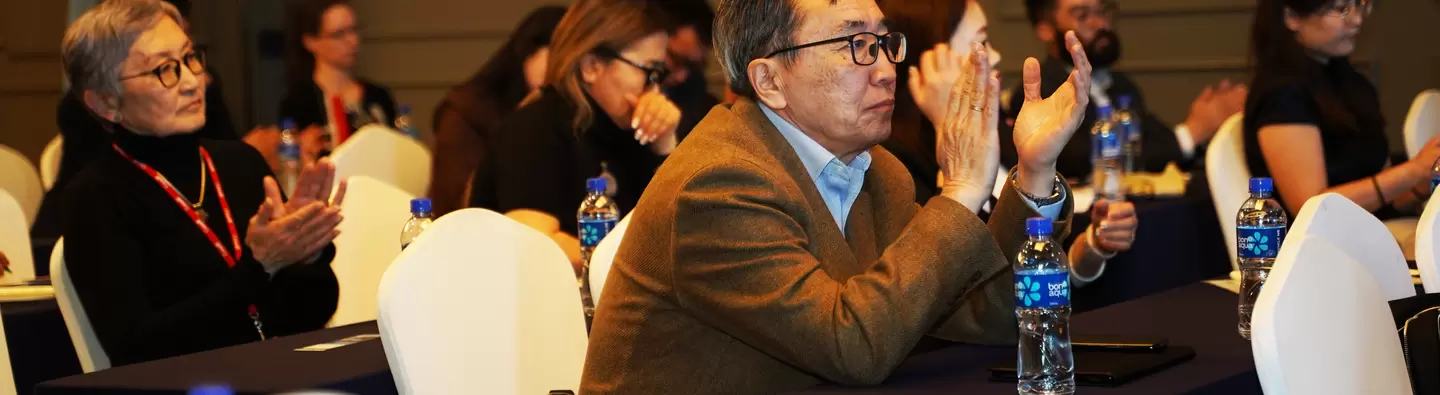
planetGOLD Mongolia project conducted a qualitative assessment – aiming to take a snapshot of the current situation of the access to and supply of key social services of artisanal miners, including social insurance, social welfare, health insurance, healthcare, and early childhood education services – and organized a dissemination seminar on the final report on April 26, 2024, in Ulaanbaatar, Mongolia.
Mr. Rene Roger Tissot, Executive Director of the Artisanal Gold Council and Project Manager at planetGOLD Mongolia project delivered opening remarks and highlighted that this study is not only important for Mongolia but also for many other countries facing similar challenges with the artisanal and small-scale gold mining (ASGM) populations. He also emphasized that it highlights the need for policies that go beyond mere formalization to ensure access to healthcare and social services, especially for women.

Following that, Ms. Amarjargal Dairii, Senior Lecturer at the National University of Mongolia's School of Arts & Science, and Independent Researcher for the planetGOLD Mongolia project, as well as Ms. Lkhagvadulam Jamiyandagva, National Gender Specialist for the planetGOLD Mongolia project, delivered presentations on the main findings and research recommendations.
The study, “Assessing the Gap: Artisanal Gold Miners and Social Services”, revealed relatively low coverage of social and health insurance among artisanal miners compared to the national average and other rural community members. In particular, it was found that attention should be paid to the generation of the pioneer miners, mainly male, who have a minimum income security of social welfare and whose health and working capacity deteriorated at a younger age due to high occupational risks. Also, aside from the behavioral and knowledge barriers observed during the study, systemic and legal obstacles were found in miners’ access to social insurance. The study also revealed room for improving healthcare, health insurance, and early childhood education with consideration of the differentiated needs of the miners.

According to the planetGOLD program in 2021, the ASGM sector employs 10–20 million miners, including 4–5 million women and children, in over 80 countries worldwide. It is known as a low-barrier-to-entry sector that provides an important source of income for remote communities. Additionally, ASGM produces 20% of the world’s gold annually. According to the Artisanal and Small-Scale Mining National Federation of Mongolia, there were around 100,000 individuals employed in Mongolia's ASM sector at its peak, supporting 400,000 people. A lack of official and accurate data on artisanal miners was revealed during the study, making it harder to meet their differentiated needs for selected social services. Regardless, inactive formalization efforts and inconsistent policy, however, triggered a downturn in recent years, leaving these people unemployed and struggling to make ends meet.

Therefore, further consistent, and stable policy and local support for the ASM sector have been recommended to enhance their formalization and improve miners’ employment and social security. For effective collaboration and coordination between government authorities, ASM organizations, and other stakeholders to succeed it is equally important to consider miners’ experiences and different needs related to social protection policies and programs and their implementation.
At the conclusion of the seminar, participants actively discussed and shared their thoughts and suggestions for the project and the researchers. The planetGOLD Mongolia project also highlighted generous support and multiple-year funding towards the development of the ASGM sector in Mongolia to the Global Environment Facility, the United Nations Environment Programme, and the United Nations Industrial Development Organization. The project also thanked the artisanal miners, local assistants, artisanal and small-scale mining partnerships, and NGOs in Selenge, Khovd, and Gobi-Altai provinces for their participation and assistance throughout the research and report writing processes.
Read the full report: https://www.planetgold.org/sites/default/files/Assessing-the-Gap-Artisanal-gold-miners-and-social-services.pdf


Comments
This is Liam Liu from FKN Group Limited. I am the CEO of this company. We are the Chinese manufacturer of gold dressing agent. In order to deploy in the global market, we are looking for a distributor which is interested in our product with strong commitment to follow through, wide networking in the gold mining industry and strong financial capability to market our product in local countries.
The purpose of contacting you is to ask you to help us and to find such a local partner via your organization. I am noted that your organization in Mongolia to reduce the use of mercury. I want to make contribution for this initiative, also want to promote our eco-friendly gold dressing agent with this activity. If the gold mines can invest several crushers and ball mill, our product also can be used to replace mercury. It will dramatically reduce the environmental pollution.
I will highlight our product based on the following items.
1. Feature:
1.1 The feature of our Panda gold dressing agent is eco-friendly, low toxic and can replace sodium cynaide completely in the gold mining. It has been widely used in domestic and some foreign countries.
1.2 The use and the process of our product is completely the same as sodium cynaide. No matter whether you are using heap leaching or carbon in pulp(CIP)/ carbon in leaching(CIL), pond leaching, tank leaching or vat leaching, our product can be used in the same scenarios.
1.3 Panda’s recovery rate can be same or close to that of cyanide
1.4 The consumption vary from types of gold ore. For oxidation gold ore, its consumption generally could be 1-1.5 times of that of cyanide(depends on the test result of trial production). For non-oxidation gold ore, its consumption could be 1.5-3 times of that of cyanide(depends on the test result of trial production). The high contents of copper, silver such metal composition in the gold ore will dramtically increase the consumption of Panda gold dressing agent. If the clients don’t consider the usage cost, Panda can nearly replace cyanide in all cases.
2. Application scenarios:
2.1 The clients are not allowed to use cyanide because local government forbid to use cyanide and wants to protect environment.
2.2 The clients can’t buy cyanide as they are not licensed gold mines.
2.3 The clients buy cyanide with very high price because of some reasons, such as their small scale itself, the location, the country development level, governmental authorization and policies etc.
3. Target audience:
3.1 Legal or illegal mall scale or artisanal gold mine: Heap leaching, pool leaching, tank leaching and vat leaching.
3.2 Large gold mine: Oxidation gold ore with carbon in pulp or carbon in leaching or heap leaching
3.3 Newly opened gold mine (penetration before commissioning)
Please check our updated brochures.
For more information, please visit our website: https://www.golddressingagent.com
If you are interested in our product, please contact me by whatsapp: +86 1377 064 8803. Thanks!
Best regards,
Liam Liu
FKN Group Limited
Tel/Whatsapp: +86 137 70648803
Add: Room 2512, Unit 1, Huaqiao Square, No.1, Daqiao North Road, Jiangbei New District, Nanjing, China
Website: https://www.golddressingagent.com