

This webinar explored how emerging digital tools such as artificial intelligence, chemical tracing and fingerprinting technologies, digital traceability platforms, remote sensing and other earth observation tools are being applied in artisanal and small-scale mining contexts
Digital technologies are reshaping how artisanal and small-scale mining (ASM) communities, miners, governments, and supply-chain actors monitor activity, demonstrate responsible practice, and connect to formal markets. Remote sensing and earth observation now allow near-real-time tracking of mining footprints, land disturbance, and environmental change across remote and previously inaccessible sites. Artificial intelligence is being applied to interpret these data streams at scale, surfacing patterns that support better-targeted interventions. Alongside these monitoring tools, chemical tracing and fingerprinting methods are emerging as a way to verify the origin of minerals, while digital traceability platforms are building the records needed to bring ASM gold and other materials into responsible, mercury-free supply chains.
This webinar brought together practitioners working at the leading edge of these approaches to share concrete use cases and lessons learned. Speakers showed how remote sensing, AI, chemical analysis, and supply chain traceability are being deployed in real ASM contexts to strengthen environmental oversight, improve livelihoods, and support miners and communities on the path to formalization. The session was intended as a practical exchange: what these tools can and cannot do today, what it takes to implement them in ASM settings, and how they fit together to advance responsible mining.
Live interpretation was provided in French, Spanish, and English. View each recording below.
English Recording:
Spanish Recording:
French Recording:
Facilitator: Kenneth Davis, UN Environment Programme
Panelists:
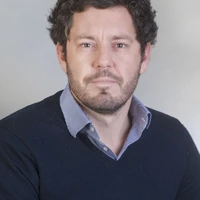
Benjamin Clair - Founder and CEO, Datastake
Benjamin is the founder and CEO of Datastake, and builder of DAAC. He has worked in the artisanal and small-scale gold mining sector for fifteen years, beginning with traceability and certification programmes, before turning to the questions those programmes kept running into: access to finance, supply-chain due diligence, ASM formalisation, and local economic development. That work led him to the sector's underlying gap: the data systems that would let an operator be seen, evaluated, and trusted barely exist. Today Datastake builds digital applications serving the ASM sector across those fronts, and through DAAC his team maintains public data infrastructure for the sector — including the Gold Hub, a knowledge graph of the gold sector.

Dario Biedermann - Head of xTrace, aXedras
Dario is Head of xTrace at aXedras, where he leads the development and implementation of origin verification technology for gold supply chains. His work focuses on the use of analytical data and digital technologies to strengthen sourcing controls, identify supply chain risks, and provide an independent layer of verification alongside established due diligence processes. Dario has worked for over seven years in gold traceability and responsible sourcing, with particular experience in artisanal and small-scale gold mining, centralized processing plants and refineries. He works closely with participants across the gold value chain on the practical deployment of Origin Verification Technology (OVT), combining X-ray fluorescence, compositional data analysis and machine learning with operational supply chain workflows. His current work includes the implementation and validation of xTrace across gold-producing and refining operations in Africa, Latin America and Europe, as well as collaboration with industry stakeholders including the World Gold Council and LBMA. His focus is on developing solutions that can operate under real-world conditions, scale across diverse sourcing environments and help institutions manage the risks associated with increasingly complex gold supply chains. Dario holds an MSc in Applied Geophysics from ETH Zurich, RWTH Aachen University and Delft University of Technology.
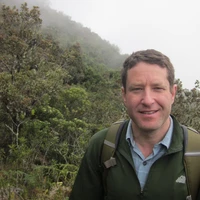
Matt Finer - Senior Research Specialist, Amazon Conservation
Matt is the Senior Research Specialist at the organization Amazon Conservation. He specializes in real-time monitoring across the Amazon, using satellites to connect cutting-edge technology with effective policy action. As part of this work, he leads MAAP (Monitoring of the Andean Amazon Project), a program within Amazon Conservation dedicated to publishing real-time information on urgent threats and key big picture conservation issues across the region. Early in his career he published a number of scientific papers on threats to the Amazon, and more recently focused on publishing MAAP reports (249 and counting). Dr. Finer received his doctoral degree from the School of Biological Sciences at Washington State University in 2003 and has been working on Amazon conservation issues ever since (20+ years).

Mikel Maron - Product & Operations Lead, Earth Genome
Mikel Maron leads product and operations at Earth Genome, applying AI, science and design to put Earth data in the right hands at the right time, taking on today's biggest nature and climate challenges. His background includes leading corporate social responsibility at Mapbox and elevating open mapping in the federal government as a Presidential Innovation Fellow. He has an extensive track record in community driven data, notably founding Map Kibera and the Humanitarian OpenStreetMap Team, alongside his years of service on the OSM Foundation Board.
Add new comment