

Voices
30 October 2024
Countries:
-
 Communications Consultant, planetGOLD Uganda
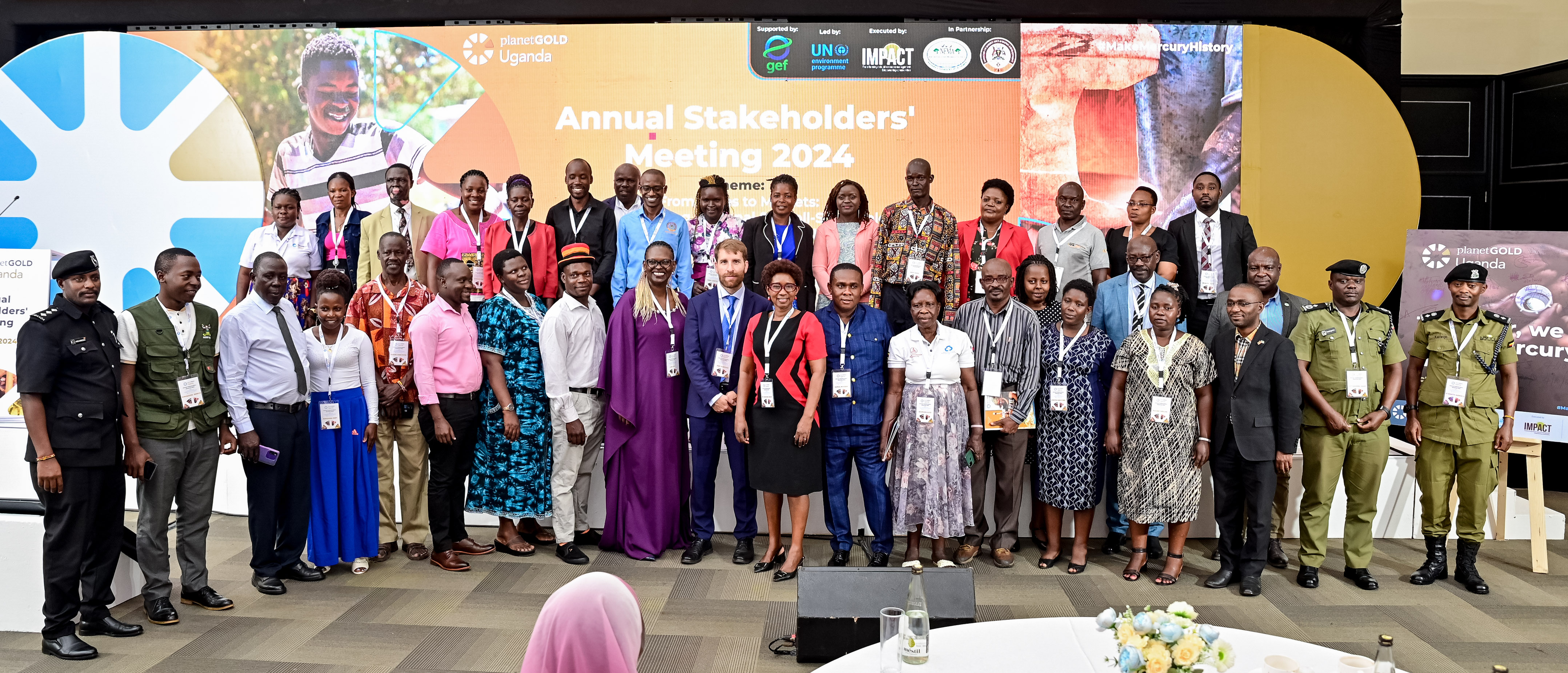
The planetGOLD Uganda project convened key stakeholders in Kampala on October 4, for its second annual meeting, uniting voices in support of a more responsible artisanal gold mining sector. This gathering marks three years since the project inception.
This year’s theme, "From mines to markets: Strengthening artisanal and small-scale gold mining through cooperative networks," emphasized the project’s mission to reducing mercury use in artisanal and small-scale gold mining (ASGM) and empowering miners through cooperatives to create better economic opportunities.
The event was attended by a diverse group of stakeholders including government officials, representatives from the Ministry of Energy and Mineral Development, civil society organizations, development partners such as the National Environment Management Authority (NEMA) and United Nations Environment Programme (UNEP), as well as members of Parliament representing mining constituencies. The meeting created a platform for open dialogue on reducing the adverse environmental impact from mercury use and promoting cooperative structures within the ASGM sector. Some key discussions focused on strategies to empower Uganda's artisanal miners through improved access to financing, formalization, and sensitization campaigns.
The meeting was also an opportunity for the project to showcase its achievements and impact in the ASGM sector since its launch through a publication featuring stories directly from artisanal miners and the project partners.
Lynn Gitu, the planetGOLD project manager, speaking on behalf of the project encouraged stakeholders to embrace dialogue and collaboration to support miners in accessing financial tools. "This meeting is an opportunity to come together, learn from each other, and explore ways to support the primary beneficiaries of this project—the miners," Gitu noted.
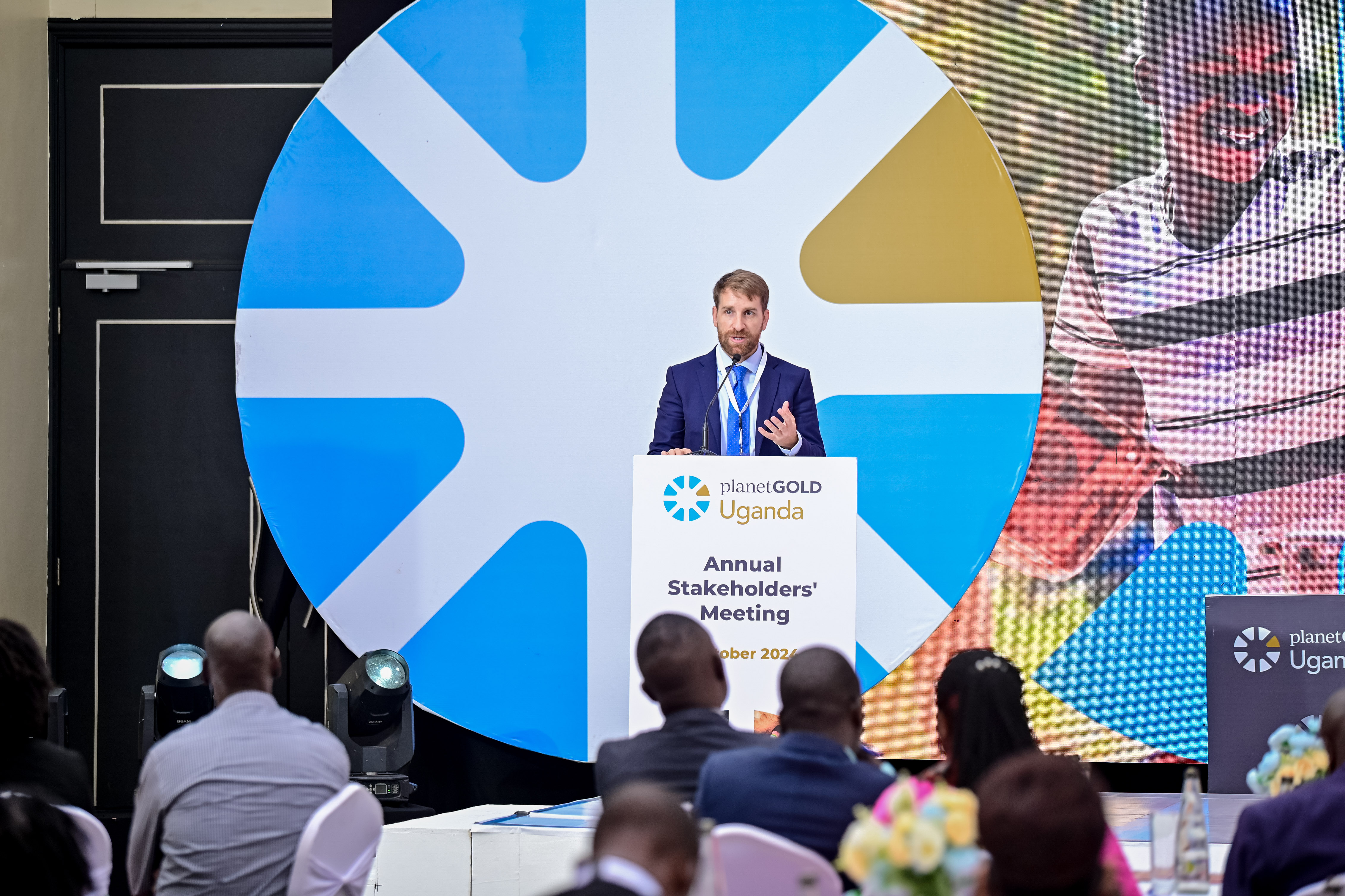
Iñaki Rodríguez, the representative from UNEP, commended the collaborative efforts of the different actors in the ASGM sector, highlighting that shared solutions are key to better sector management and the promotion of responsible mining practices. “The extraction of minerals has an impact on nature; however, we have the expertise to improve the way we mine in a way that improves people's health and at the same time reduce the impact we are creating on the environment,” he said. Iñaki urged all stakeholders to commit to making mercury history in artisanal and small-scale gold mining.
Reducing mercury use and environmental impact
ASGM often involves the use of mercury, a hazardous substance that poses serious health and environmental risks. Hon. Phiona Nyamutoro, Minister of State for Energy and Mineral Development (Minerals), who officiated the opening ceremony, stressed the importance of raising awareness among miners about these dangers. "While mercury seems quick and easy, it is our responsibility to educate miners that it harms both health and environment," Nyamutoro stated. She indicated that current baseline assessments on mercury levels, conducted in collaboration with agencies like NEMA, will provide essential data to inform mercury-free initiatives and offer critical insights for crafting effective intervention strategies.
Miners on cooperative networks
Formalization and the creation of cooperative societies were highlighted as essential steps towards responsible mining. Josephine Aguttu, an artisanal and small-scale gold miner from Tiira Mine Site in Busia District, shared her experience, illustrating how joining a cooperative helped her and other women miners to break barriers in a traditionally male-dominated sector. "Being part of a cooperative has transformed our livelihoods. We can save gold weekly and sell collectively, allowing us to secure better prices and grow our savings," Aguttu explained. Through cooperatives, miners gain access to markets, financial stability, and a more secure livelihood.
A commitment to a brighter future
The meeting set the stage for stronger partnerships and a renewed commitment to the planetGOLD Uganda project’s vision of a responsible artisanal and small-scale gold mining sector. After signing a commitment board, the project’s stakeholders left the meeting with a unified pledge to foster responsible practices, reduce mercury use, and support the livelihoods of the country’s artisanal miners.
Watch a video summary of the day on YouTube.
The planetGOLD Uganda project is supported by the Global Environment Facility (GEF) and led by the UN Environment Programme (UNEP). It is executed by IMPACT in partnership with Uganda’s National Environment Management Authority (NEMA) and the country’s Ministry of Energy and Mineral Development under the Department of Mines. The project aims to reduce the use of mercury by supporting formalization of the artisanal gold mining sector and increasing access to finance. This will lead to adoption of mercury-free technologies and allow access to more responsible and traceable gold supply chains.
Knowledge Areas: