

Voices
11 July 2025
Countries:
-
 Zimbabwe
Artisanal and small-scale gold mining (ASGM) is a significant driver of Zimbabwe’s gold output. Seeking to enhance the sector’s contribution to the national economy, the Government of Zimbabwe developed a draft Artisanal and Small-Scale Gold Mining Strategy in consultation with sector stakeholders. The strategy will provide a framework to guide the Government and relevant parties in maximizing the sector’s potential. As part of its support to introduce more responsible practices to the ASGM sector, the planetGOLD Zimbabwe project hosted stakeholders to discuss the government’s draft Strategy.
The meeting aimed to strengthen stakeholder engagement, foster consensus, and ensure collective ownership for the finalization and adoption of the document. The dialogue was organised in collaboration with the Ministries of Mines and Mining Development, and Environment, Climate and Wildlife.
ASGM is a significant economic driver for Zimbabwe, with the sector producing 70% of the country’s total gold production in 2024. While gold is the single largest export commodity, generating $2,4 billion USD in 2024, growth in the ASGM sector is hindered by multiple challenges that are driven by informality.
Artisanal gold miners face high taxes and fees, which are compounded by lengthy and complicated bureaucratic processes, a lack of access to land, and an attractive illicit market which offers better prices and USD liquidity than the country’s sole buyer Fidelity Gold Refinery (FGR). Additionally, while Zimbabwe has many legislations and regulations that govern the ASGM sector, these are not always well known or enforced.
Miners working in the sector also often have little knowledge of how to improve practices to support their formalization, as well as their health and safety. Research carried out by UNEP found that 96% of the country’s gold processing sites used mercury, which travels long distances to pollute the air, water and agricultural land. Compared to mercury-free technologies, mercury requires no upfront investment, which can be out of the financial reach of many miners. In addition, participation in the sector is uneven. Women working in the ASGM sector often face disproportionate negative impacts and face significant levels of inequality compared to men.
The ASGM strategy proposes several interventions to address the challenges hindering the sustainable development of the sector, including a lack of technical expertise, lack of finance and poor safety, health and environmental standards, and informality.
Opening the dialogue, Chief Government Mining Engineer, M. Munodawafa asserted, “informality makes it difficult to regulate and ensure safe working conditions in the ASGM sector.”
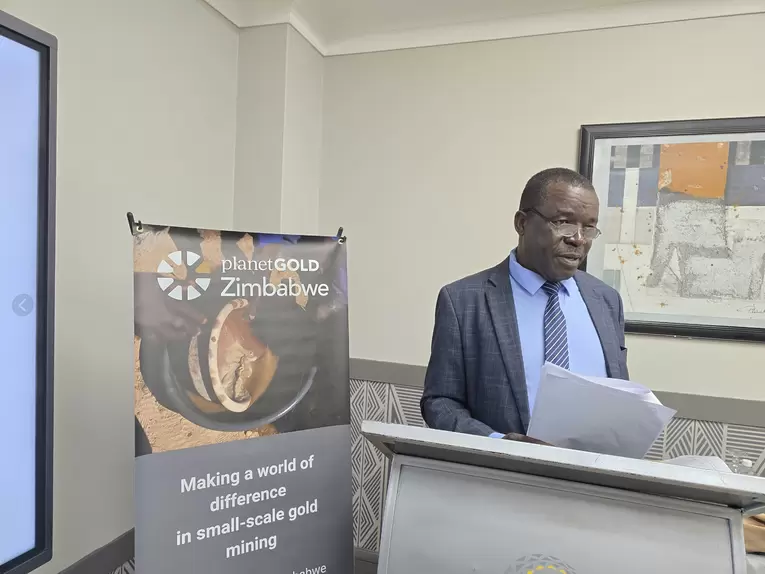
Munodawafa outlined the measures proposed in the strategy that are expected to address sector challenges, such as enhancing legal and institutional frameworks to facilitate specialized mining titles and harmonizing levies. It further proposes incentives to stimulate increased gold deliveries to FGR, district level gold processing and buying units to decentralize supply chains, and training programs to help miners meet health and safety standards and mitigate environmental degradation.
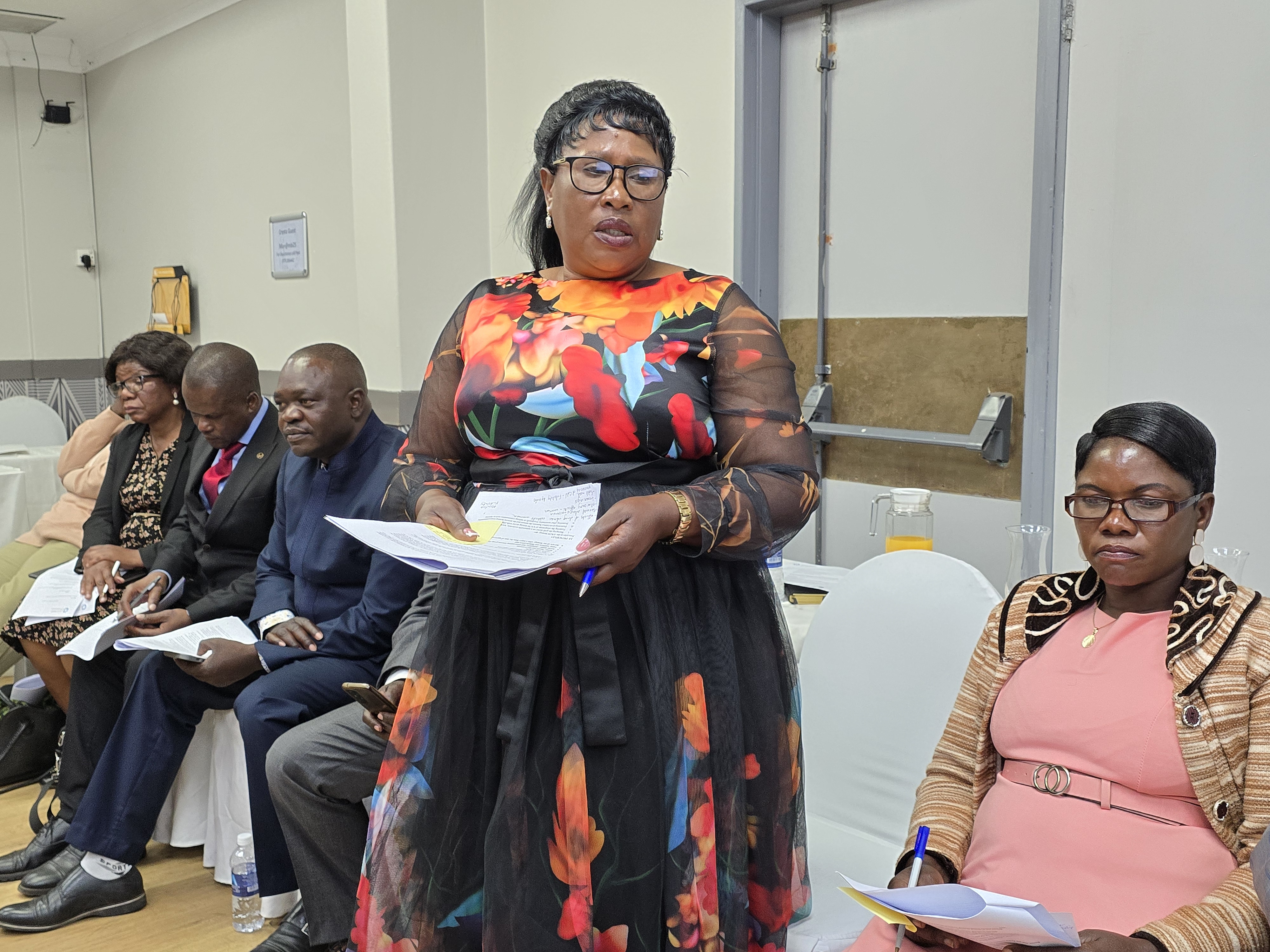
Women miners attending the dialogue made several presentations discussing their challenges in the sector including limited access to funding, registration, and limited access to mining claims. Critically, they highlighted the need for targeted training on mercury handling for women and made a special request to Eng. Munodawafa for an office dedicated to assisting women and special interest groups to address their challenges. Ministry officials directed women miners towards existing resources for immediate relief, adding that the strategy committed the government to reduce barriers for women and special interest groups in acquiring titles. This includes measures such as the creation of gender-sensitive facilities, targeted financial support and affirmative skills development.
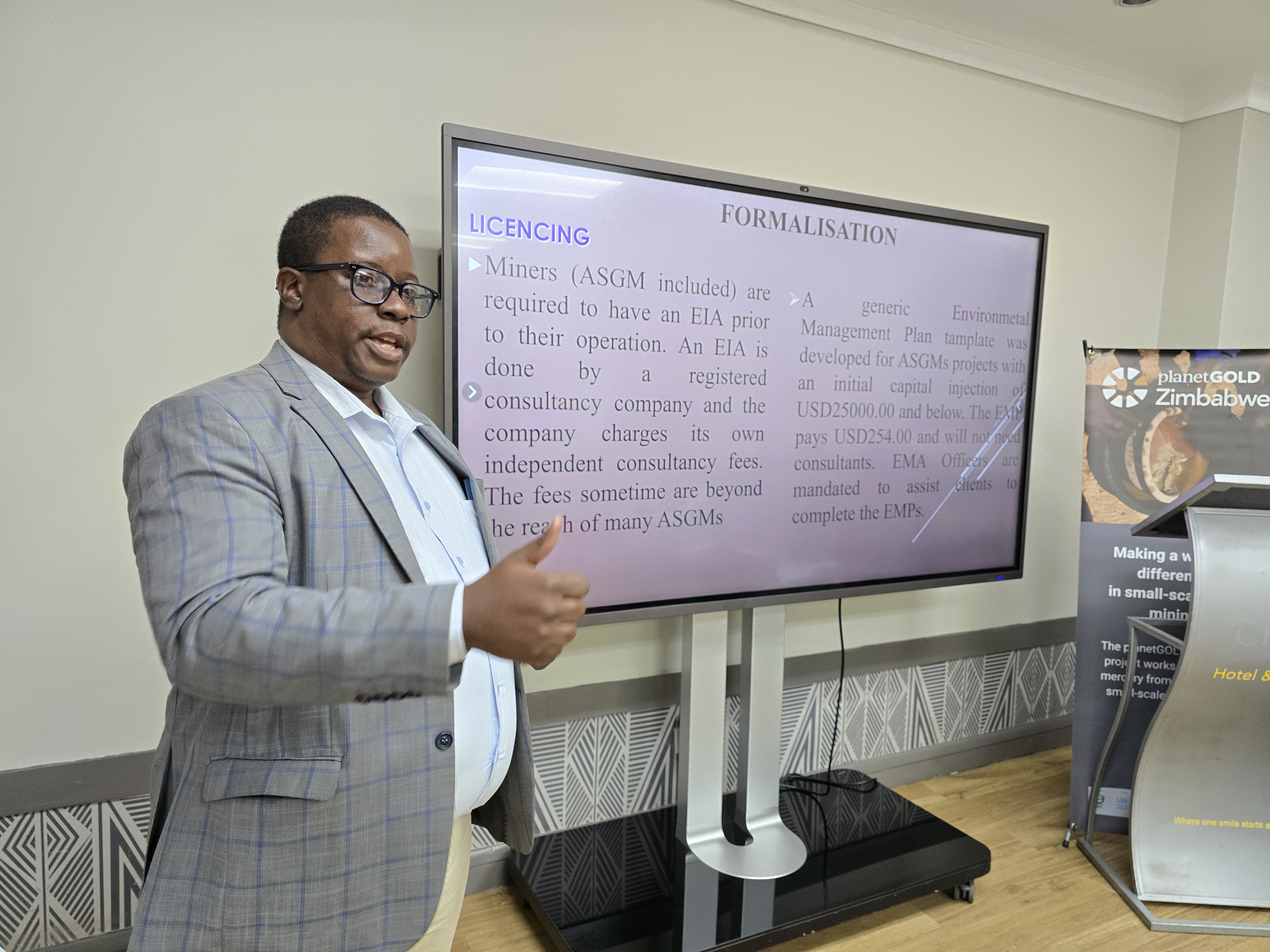
In his presentation Mr. A.T. Chikurira from Environmental Management Agency (EMA) discussed the construction and equipping of a laboratory at Beitbridge border post to test commodities moving across the border, pointing out that mercury is difficult to detect because of its small quantities and unobtrusive packaging.
The government has begun increasing its institutional capacity to prevent smuggling by acquiring an X-ray fluorescence machine to detect mercury in goods and freight, with support from the Global Environmental Facility. The machine is a handheld device that identifies metals and minerals. It will help customs officials find mercury being smuggled across Zimbabwe’s borders without destructive testing.
Chikurira highlighted EMAs efforts to support artisanal and small-scale gold mining operators, in line with Zimbabwe’s broader ASGM strategy to promote sustainable and formalized mining. For example, EMA has introduced a simpler environmental impact assessment process for small-scale mining projects worth USD 25,000 or less. The new system also cuts the administrative fee to just USD 254, making compliance easier and more affordable. These measures lower the barriers to formalisation while ensuring environmental safeguards.
Input from the dialogue and other consultative discussions will be incorporated into the Strategy, which will be shared with the Ministers of Mines and Mining Development, and Environment Climate and Wildlife for their final review. Once approved, the strategy will be published and circulated for awareness among stakeholders and launched as a national document.
The ASGM Strategy directly aligns with planetGOLD Zimbabwe’s mission to reduce mercury use and improve the health, safety, and livelihoods of artisanal and small-scale gold miners. The strategy provides a strong policy foundation to scale up planetGOLD’s work by addressing key sector challenges including informality, limited access to finance and training, and environmental harm. Once adopted, the strategy will help to create an enabling environment for the adoption of mercury-free technologies, promote formalization, ensure more equitable participation, and contribute to more responsible, inclusive and equitable mining in Zimbabwe.
The planetGOLD Zimbabwe project is supported by the Global Environment Facility (GEF) and led by the United Nations Environment Programme (UNEP). The project is executed by IMPACT, in close coordination with the Ministry of Mines and Mining Development, the Ministry of Environment, Climate and Wildlife and the Environment Management Agency.
Knowledge Areas: