
Project leaders and government officials share lessons learned from the planetGOLD programme at Minamata Convention on Mercury COP-6 meeting
News
05 November 2025
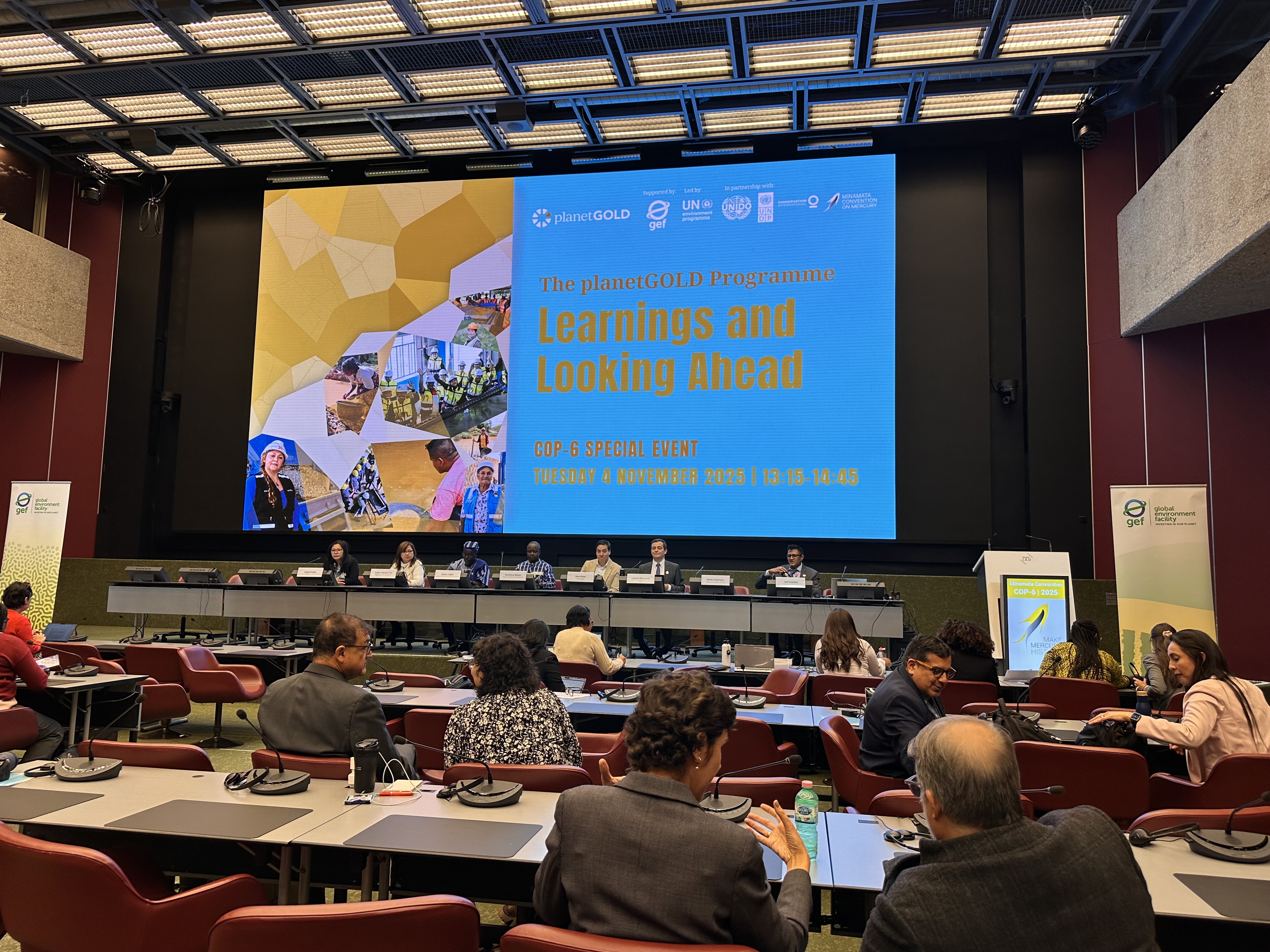
As parties to the Minamata Convention on Mercury and stakeholders convened in Geneva for the 6th meeting of the Conference of Parties, planetGOLD was featured in a Global Environment Facility sponsored special event on Tuesday, November 4, 2025, sharing lessons learned from the nine countries that were among the first to join the programme.
The event provided an opportunity for project leaders and government officials from Burkina Faso, Ecuador and the Philippines to reflect on best practices and challenges for formalization, technology transfer, and improving miner access to finance and markets—while a second panel discussion looked ahead to the next phase of the programme, with project staff from Bolivia, Côte d'Ivoire, Madagascar, Uganda and Zambia providing examples of the practical lessons they have been able to draw from the first group of country projects.
The speakers included:
- Monika Stankiewicz, Executive Secretary, Minamata Convention on Mercury
- Ludovic Bernaudat, Officer-in-Charge, Head of the GEF Chemicals and Waste Unit, Chemicals & Health Branch, UNEP
- Anil Sookdeo, Chemicals and Waste Coordinator, Global Environment Facility (GEF)
- Analiza Rebuelta-Teh, Undersecretary for Finance, Information System and Climate Change, Department of Environment and Natural Resources, Philippines
- Barthelemy Bationo, Environmental Inspector, Ministry of Environment, Burkina Faso
- Abigail Mwailenge, Project Manager, planetGOLD Zambia - Artisanal Gold Council (AGC)
- Abigail Ocate, National Project Manager, AGC Philippines
- Cristian Gonzalez, Chemical Substances and Hazardous Waste Specialist, Ministry of Environment and Energy, Ecuador
- Gabriela Urquidi, Deputy Project Manager, planetGOLD Bolivia - Projekt-Consult
- Hanitriniaina Liliane Randrianomenjanahary, National Project Coordinator, planetGOLD Madagascar - Ministry of Environment and Sustainable Development, Madagascar
- Lynn Gitu, Project Manager, planetGOLD Uganda - IMPACT
- Mario Rodas, Programme Officer, UNDP Ecuador
- Saidou Kabre, National Project Manager, planetGOLD Burkina Faso - Artisanal Gold Council (AGC)
- Yao Arthur Kouame, Project Manager, planetGOLD Côte d'Ivoire - CASE
Moderated by UNEP's Ludovic Bernaudat, GEF Chemicals and Waste Coordinator Anil Sookdeo gave opening remarks reflecting on progress made under the first group of planetGOLD country projects and the programme's expansion in recent years.
Cristian Gonzalez and Mario Rodas discussed achievements under the planetGOLD partner project in Ecuador, the National Program for Chemical Management—in particular, the project's activities improving the visibility and formal status of women mineral selectors known as jancheras.
Barthelemy Bationo and Saidou Kabre reflected on progress that was made under the planetGOLD Burkina Faso project, with a focus on the project's work to improve access to formal finance for miners through the establishment of a revolving fund mechanism with Coris Bank International.
From the Philippines, Analiza Rebuelta-Teh and Abigail Ocate shared the main achievements of the planetGOLD project in that country, highlighting the establishment of two new mercury-free processing systems in the project's pilot sites and discussing modifications that were made as a result of full consultations with local Indigenous community leaders and downstream communities.
The event featured a second panel discussion with representatives from country projects that joined the programme more recently, with representatives reflecting on examples of the ways in which they have benefited from the programmatic approach by exchanging knowledge with project staff who were part of the initial phase of the programme. Key examples of communication and awareness raising strategies were shared through poster boards displayed around the event space.
Monika Stankiewicz, Executive Secretary of the Minamata Convention on Mercury, closed the event remarking on shared challenges across geographies where countries are working to reduce and, where feasible, eliminate mercury use in ASGM. She reinforced the importance of governments revisiting and simplifying rules and processes for ASGM formalization to ensure they can be realistically achieved, and expressed support for examples in the programme of meaningfully engaging Indigenous Peoples and women.
The Convention was really right to suggest that the way forward is through formalization. It has to be simple. Governments need to revisit rules for formalization to ensure that bottlenecks are addressed so formalization can be completed. Monika Stankiewicz, Minamata Convention on Mercury Executive Secretary
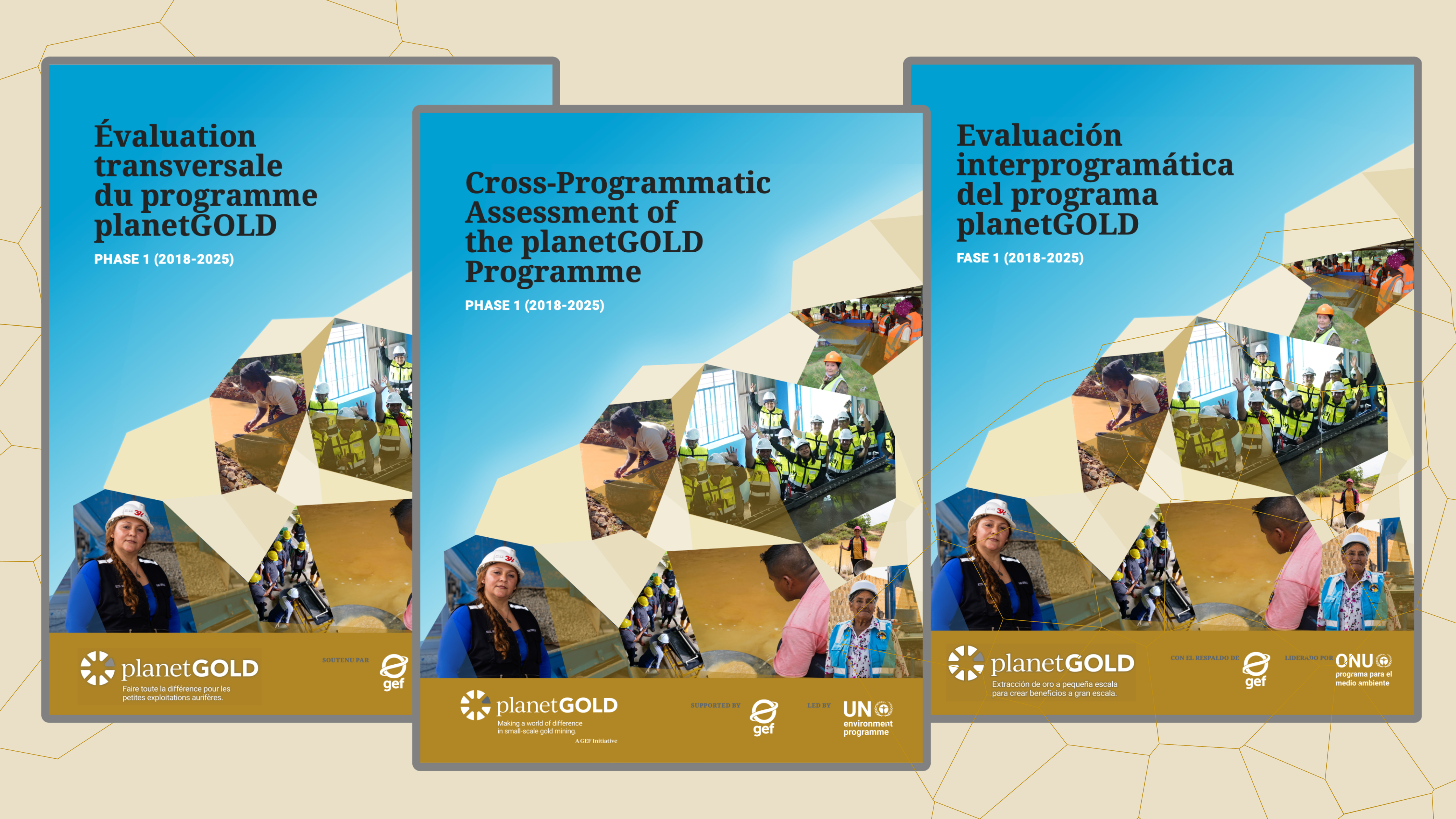
The achievements and lessons shared by representatives from Burkina Faso, Ecuador and the Philippines are just a few examples of the observations and takeaways captured in the recent publication Cross-Programmatic Assessment of the planetGOLD Programme. This report offers a comprehensive review of what strategies were taken up in these nine initial countries participating in planetGOLD—providing deep observations, takeaways, and recommendations that current and future initiatives on artisanal and small-scale gold mining can learn from.
Select Event Photos


Add new comment