

News
21 July 2025
Countries:
The planetGOLD Ghana Project, through the Environmental Protection Authority (EPA) and in collaboration with UNDP and UNIDO, organized a two-day training workshop on financial inclusion and responsible supply chains within Ghana’s Artisanal and Small-scale Gold Mining (ASGM) sector.
The workshop provided a platform to strengthen miners’ financial literacy while enabling financial institutions to gain a deeper appreciation of the specific needs of the ASGM value chain.
Dr. Frank Boateng, a mining finance expert from the University of Mines and Technology, led sessions on financial literacy, business planning, record-keeping, and risk management. The training further highlighted sustainable mining practices, with a strong emphasis on environmental, social, and governance (ESG) standards as essential requirements for sustaining operations and attracting investment.
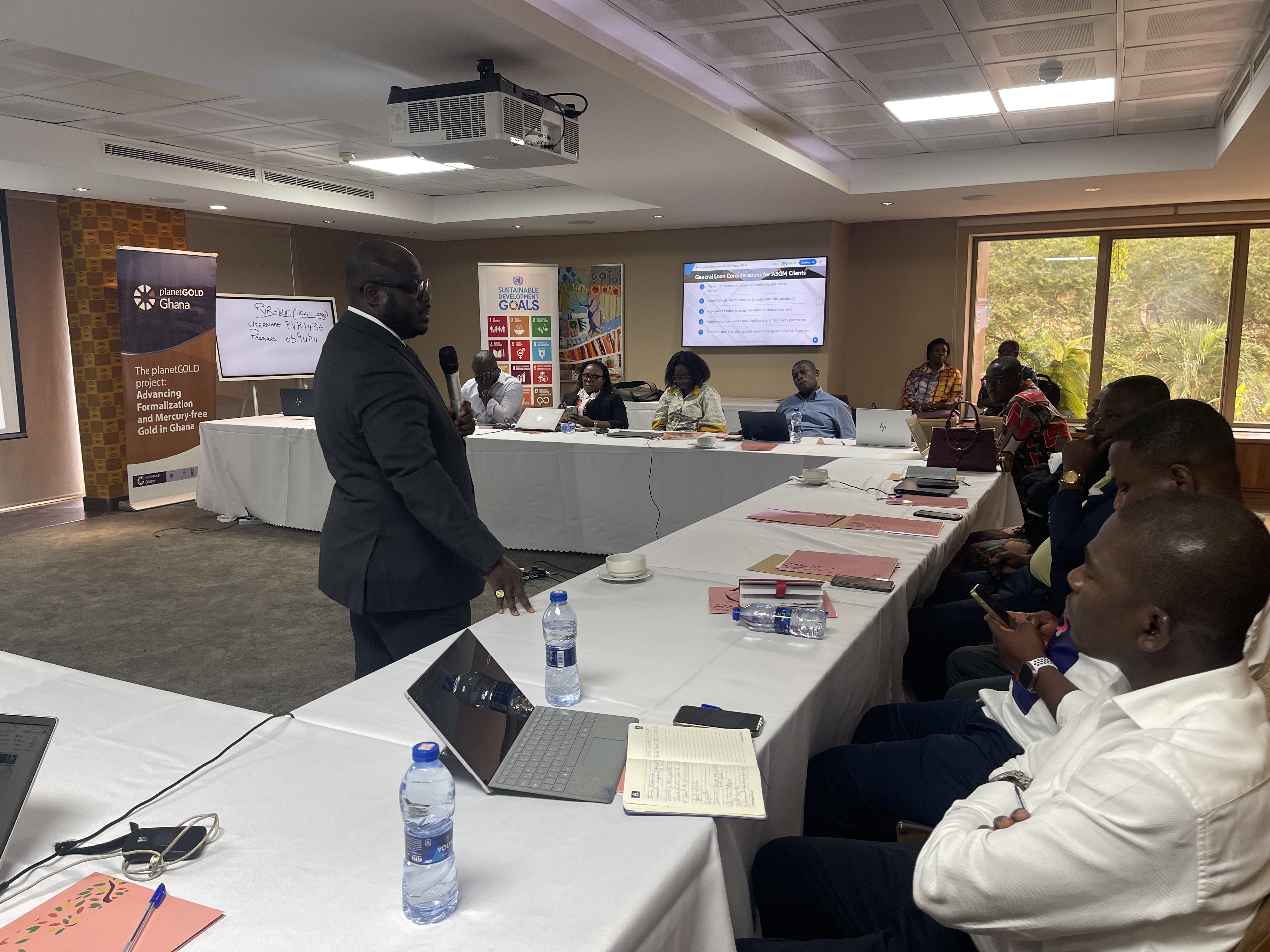
Participants expressed satisfaction with the knowledge acquired, noting its importance in positioning them to access formal financial services.
“I am excited about this training,” said Mr. Richard Osei of Okutey Mine in the Prestea Huni Valley District. “I now understand the requirements and processes needed to secure financing and investment from banks and insurance entities. I feel empowered to approach them for support.
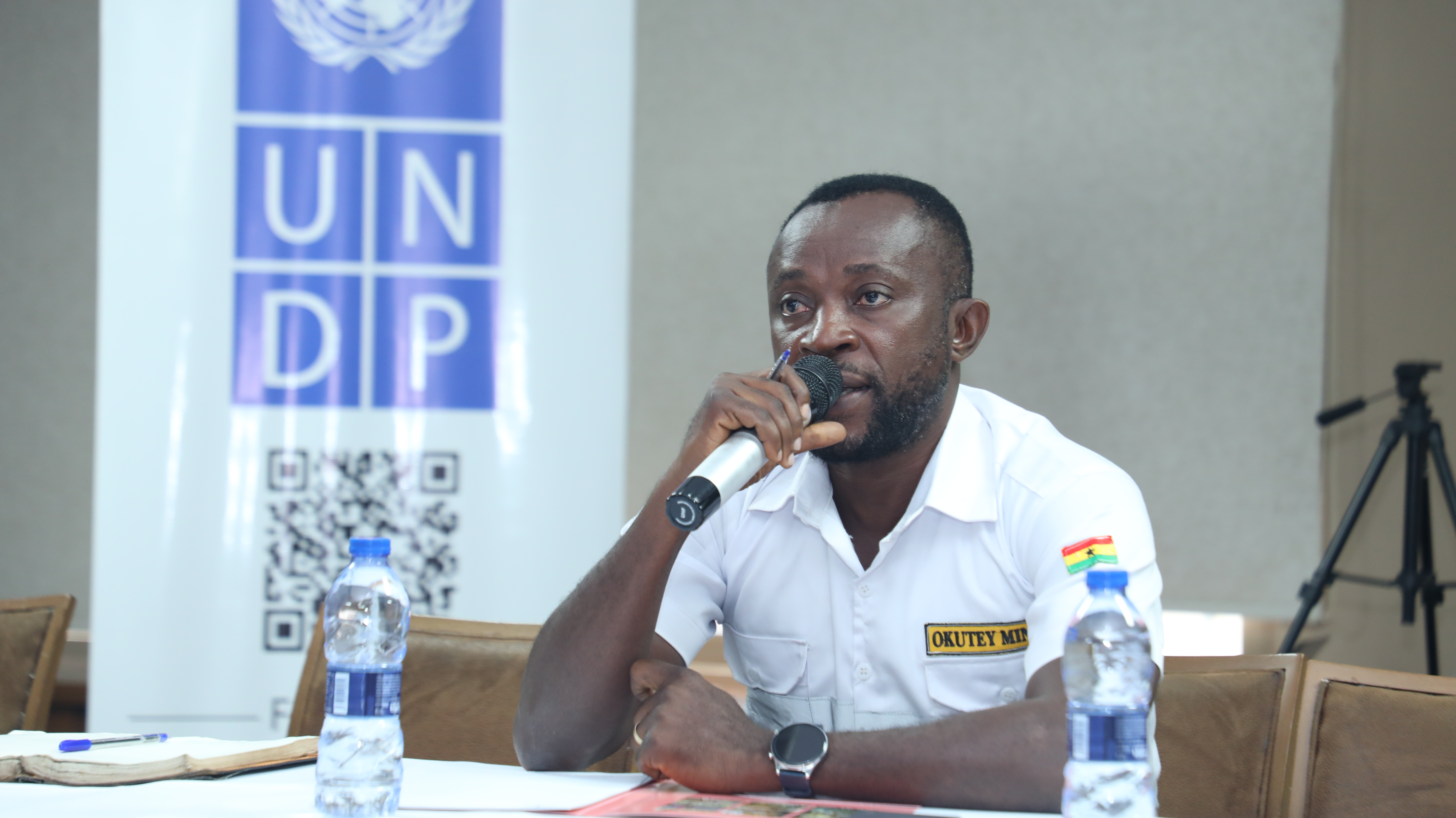
The second day of the workshop brought together representatives from commercial and rural banks, as well as insurance companies, to deliberate on the structure of Ghana’s ASGM sector. Discussions were focused on the sector’s risk profile and the potential to design tailored financial and insurance products that address the unique needs of artisanal and small-scale gold miners. Participants also examined opportunities to promote responsible mining through financing mechanisms that support the adoption of mercury-free gold mining technologies.
“This engagement has underscored the importance of building trust and creating solutions that are mutually beneficial,” noted Ms. Amanda McSamuel, Head of SME Business at Enterprise Insurance. “There is significant potential to develop insurance products that meet the needs of the ASGM sector.”

Opening the workshop, Mrs. Jewel Kudjawu, Director of Inter-Sectoral Network at the Environmental Protection Authority (EPA), underscored the strategic role of financial institutions in advancing Ghana’s ASGM sector. She emphasized that the initiative not only equips artisanal miners with the skills required to engage effectively with banks but also enables financial institutions to better appreciate the sector.
“Together, we can design sustainable financial solutions that promote formalization and strengthen responsible supply chains,” she stated.
Ghana’s ASGM sector contributes an estimated 30–40 percent of national gold output and directly employs about one million people, with another 4–5 million indirectly dependent on it. Despite its importance, around 80 percent of operations remain informal, restricting access to finance and responsible market opportunities, while mercury use continues to endanger both health and the environment.
The planetGOLD Ghana Project, funded by the Global Environment Facility (GEF) and implemented by the Environmental Protection Authority, seeks to tackle these challenges by promoting mercury-free technologies, improving access to finance, and strengthening responsible supply chains. The training workshop forms part of broader efforts to formalize the sector, safeguard the environment, and improve the livelihoods of mining communities across the country.
Knowledge Areas: