
News
27 November 2025
Countries:
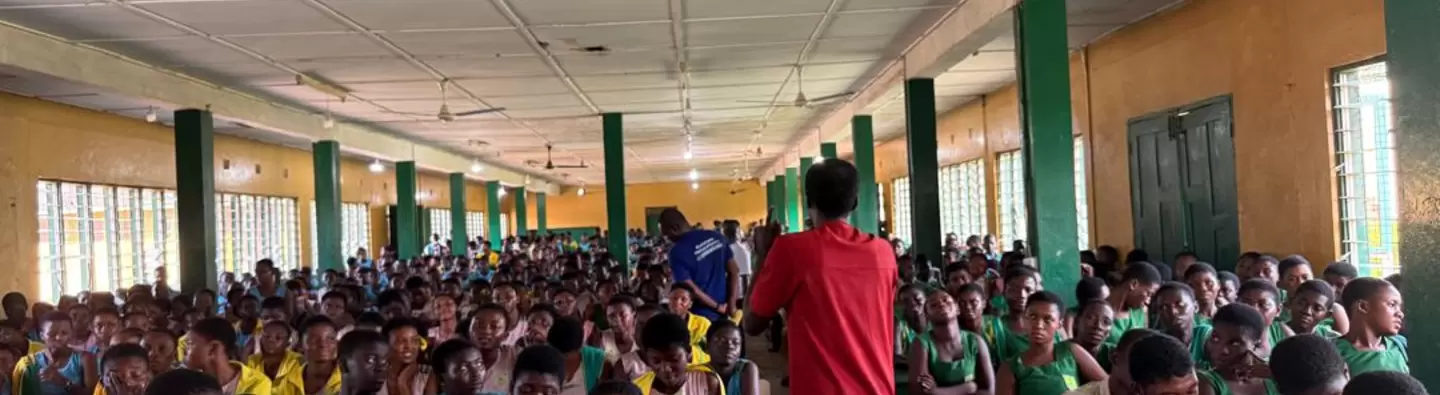
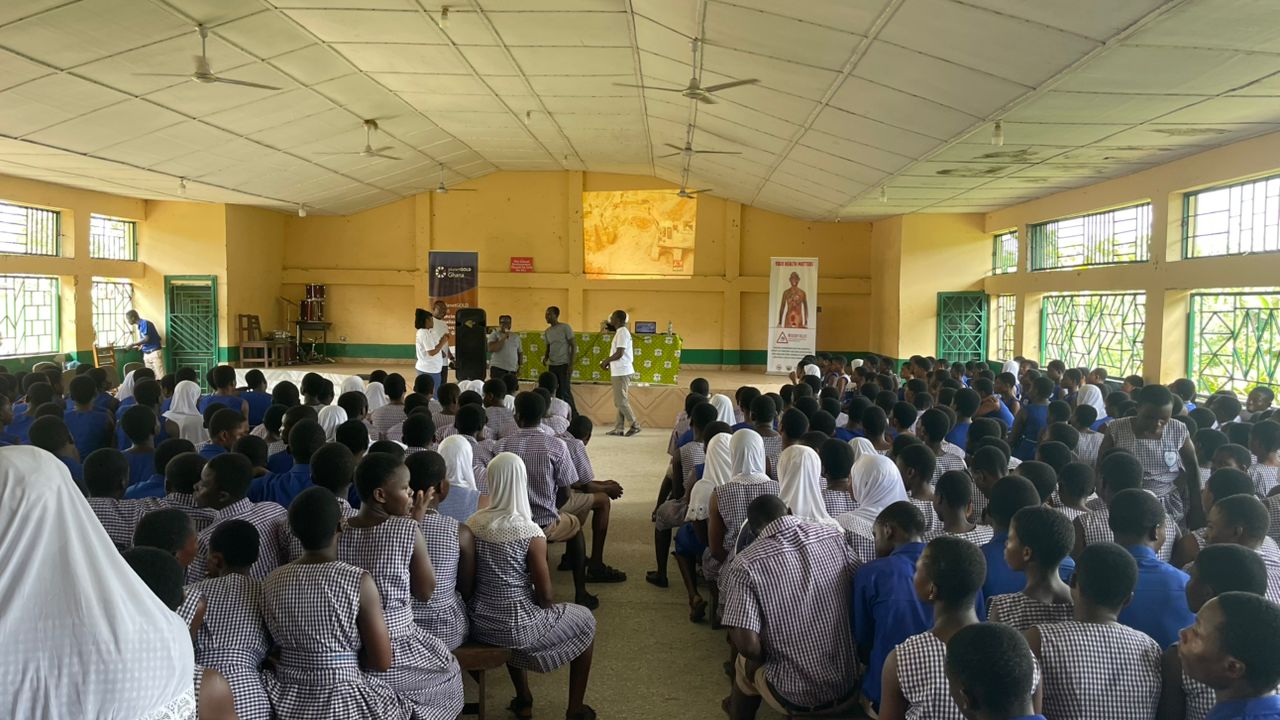
The Health Education Team of the planetGOLD Ghana Project has conducted two major educational outreach sessions at Asankrangwa Senior High School and Prestea Senior High & Technical School to raise awareness on mercury exposure and its impacts on human health and the environment. The programme forms part of ongoing national efforts to promote safer and mercury-free mining practices under the planetGOLD Ghana Project.
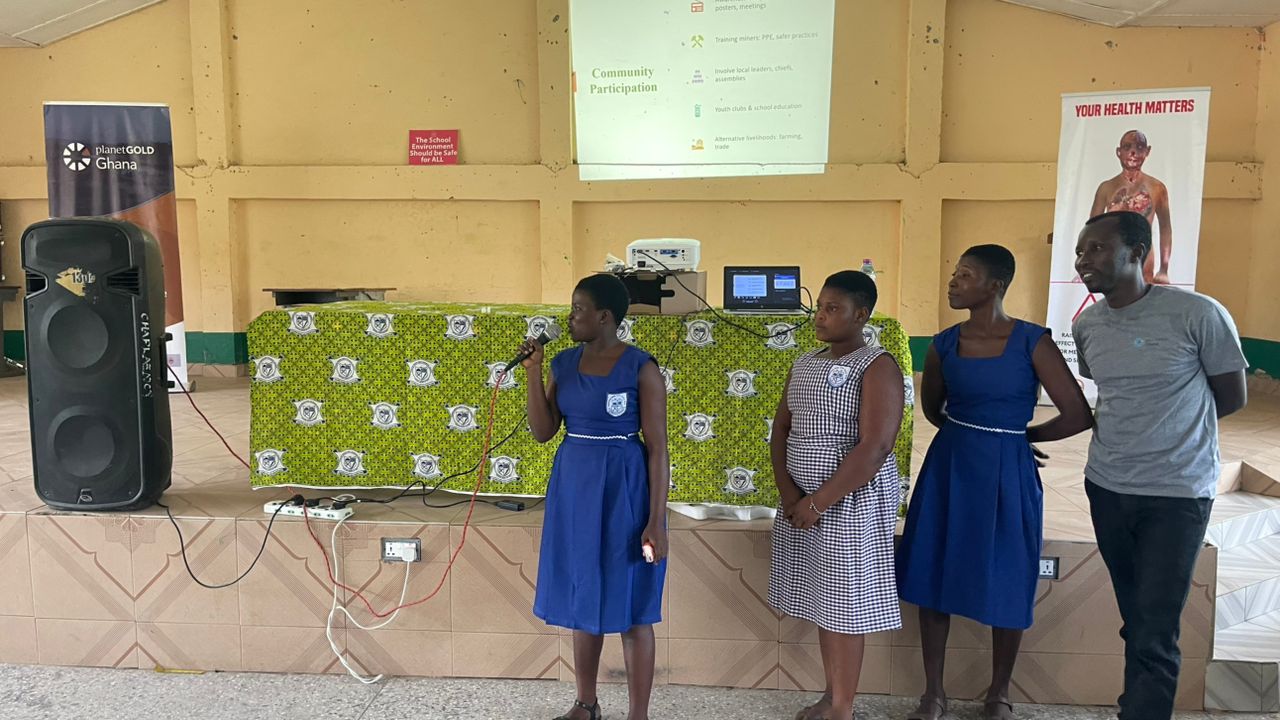
Addressing students and staff, the Project Coordinator, Mr. Lovelace Sarpong, delivered a presentation on the objectives of the initiative and emphasized the important role young people play in influencing change. He noted that students occupy a unique position within mining communities and can help discourage their peers, especially those involved in mercury use from engaging in unsafe gold processing practices. With the right information, he stressed, students can lead community-level campaigns and support the transition to mercury-free technologies.
The outreach sessions provided detailed explanations of how mercury is used during Artisanal and Small-Scale Gold Mining (ASGM), including the amalgamation and burning processes that release harmful pollutants into the environment. Facilitators outlined the transformation of mercury into methylmercury, a highly toxic compound that contaminates water bodies, enters the food chain through fish, and poses severe long-term health risks.
Participants learned about the effects of mercury pollution on surrounding communities, with facilitators stressing that exposure does not affect miners alone. Contaminated water, polluted air, and unsafe food sources contribute to widespread health risks, including neurological damage, organ failure, and developmental disorders.
During interactive discussions, students raised questions about the possibility of curing mercury exposure and restoring contaminated environments. Facilitators clarified that there is currently no medical cure for mercury poisoning, reinforcing the need for prevention and adherence to safe environmental practices.
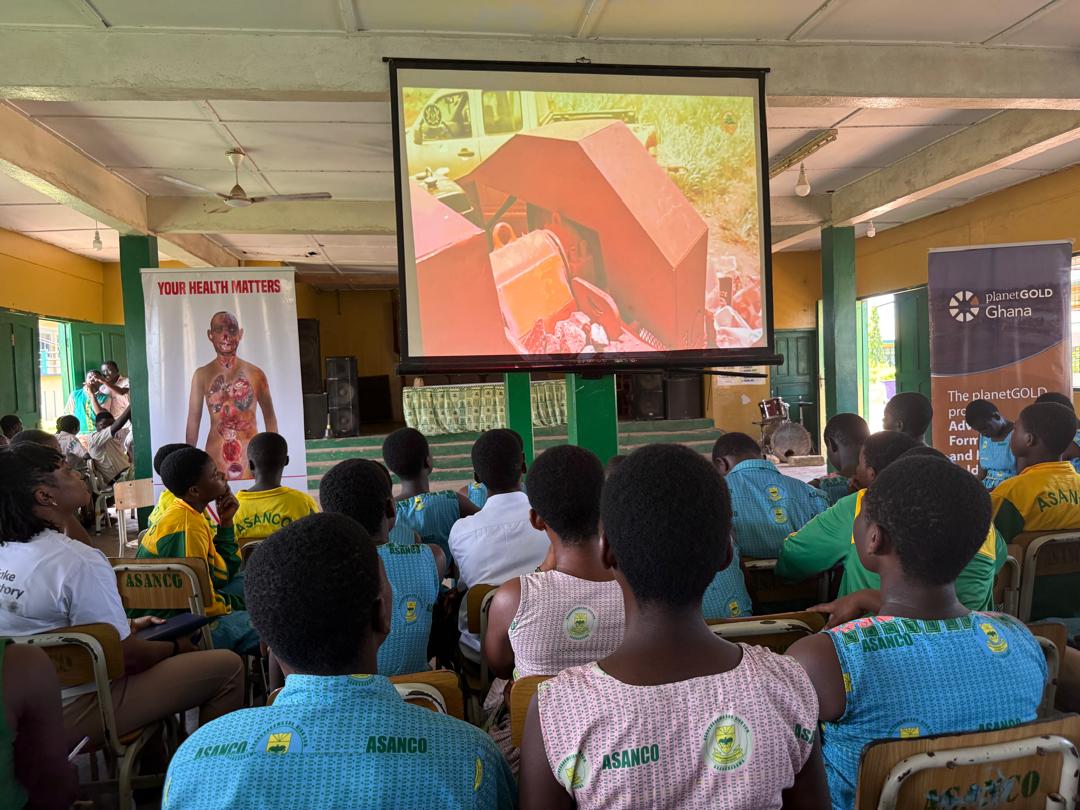
Some students shared personal testimonies of their experiences in small-scale mining, offering firsthand insights into the dangers associated with mercury use. Video documentaries shown during the sessions further demonstrated the devastating impacts of mercury contamination on rivers, crops, and public health.
In total, 3,570 students, teachers, and school management representatives participated actively in the outreach activities. Many students expressed renewed determination to promote safe environmental practices within their schools and communities.
The planetGOLD Health Education Team also discussed practical ways students could sustain awareness on the impacts of ASGM, including forming or strengthening environmental clubs, organizing school-based campaigns, and leading community clean-up exercises.
The outreach programmes at Asankrangwa Senior High School and Prestea Senior High & Technical School successfully enhanced students’ understanding of mercury exposure and empowered them to contribute to the national movement toward safer, mercury-free mining practices.
Knowledge Areas: