

News
23 October 2025
What are some of the most promising strategies and activities that can help more responsible, mercury-free practices take hold in the artisanal and small-scale gold mining (ASGM) sector globally?
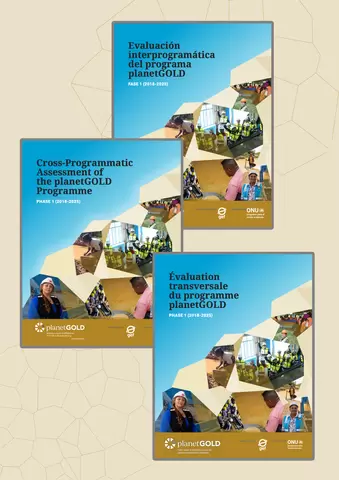
A new analysis released today by the GEF-funded planetGOLD programme aims to shed light on this question by examining what has been learned so far in the programme. The report, Cross-Programmatic Assessment of the planetGOLD Programme, offers a comprehensive review of what strategies were taken up in nine countries that were among the first to join the programme—providing deep observations, takeaways, and recommendations that current and future initiatives on artisanal and small-scale gold mining can learn from.
Available in English, French and Spanish, the report first examines planetGOLD project strategies for ASGM development in terms of formalization, technology transfer, financial and market access, and communications, and includes observations and recommendations for activities under each of these programme pillar areas. Common challenges, divergent approaches, and successful methods are discussed against the background of gender and Indigenous issues. The report then reflects on sustainability of outcomes and concludes with general observations and final recommendations.
As planetGOLD continues to expand to include more countries, the knowledge captured from this first group of countries is highly useful for newer projects joining the programme and for others working to deliver meaningful impact around the globe.
Background
The planetGOLD programme works to significantly improve the production practices and work environment of artisanal and small-scale gold miners, as a means of reducing mercury use. By working to close the financing gap, supporting formalization, raising awareness, and connecting mining communities with mercury-free technology and formal markets, the programme aims to demonstrate a pathway to cleaner and more efficient small-scale gold mining practices that benefit everyone, from mine to market.
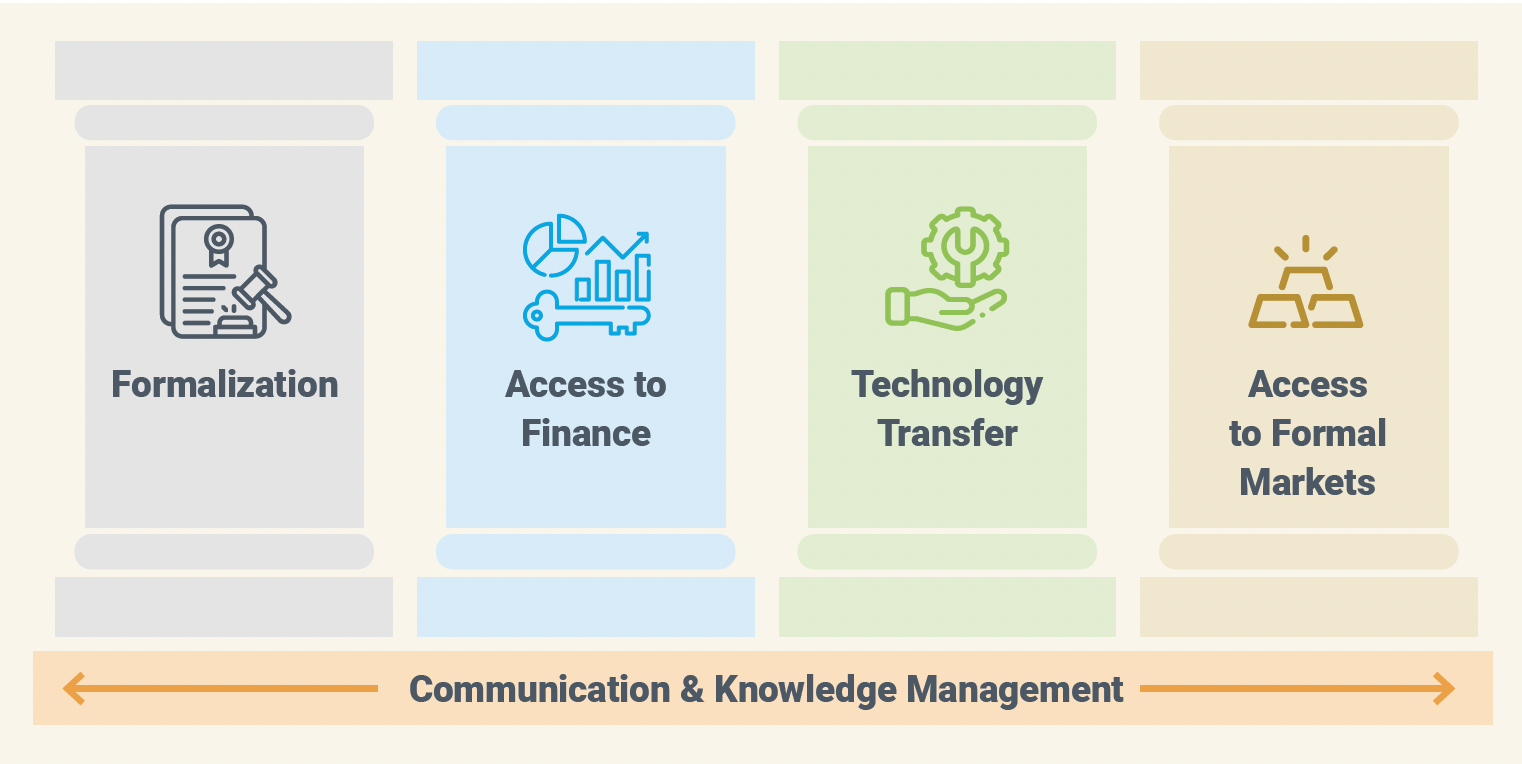
Starting in 2018, the first group of planetGOLD projects began in Burkina Faso, Colombia, Guyana, Indonesia, Kenya, Mongolia, Peru, and the Philippines. These eight countries, together with a partner project in Ecuador, set out to advance responsible, mercury-free practices to make artisanal and small-scale gold mining safer, cleaner and more profitable.
Working across the four technical pillars of the programme—formalization, access to finance, technology transfer, and access to formal markets—these nine projects carried out activities to address each aspect of this theory of change, with special attention to communications and knowledge management and to gender inclusion.
From the Report
From 2018 to 2025, these nine planetGOLD projects across the globe piloted strategies such as:

- Supporting governments to improve legislation and formalize the sector
- Helping miners to comply with regulatory requirements

- Partnering with commercial and microfinance banks to develop new financial products for miners
- Improving miners’ financial literacy skills

- Deploying mercury-free ore processing technologies
- Providing technical training to help ensure interventions were sustained

- Promoting due diligence across gold supply chains
- Engaging diverse market actors to facilitate trade and promote the sector’s development
Cutting across all activities were initiatives to raise awareness in local communities, widely promoting the benefits of a more responsible, mercury-free ASGM sector, increasing the visibility of women working in ASGM, and working to advance gender equity in the sector.
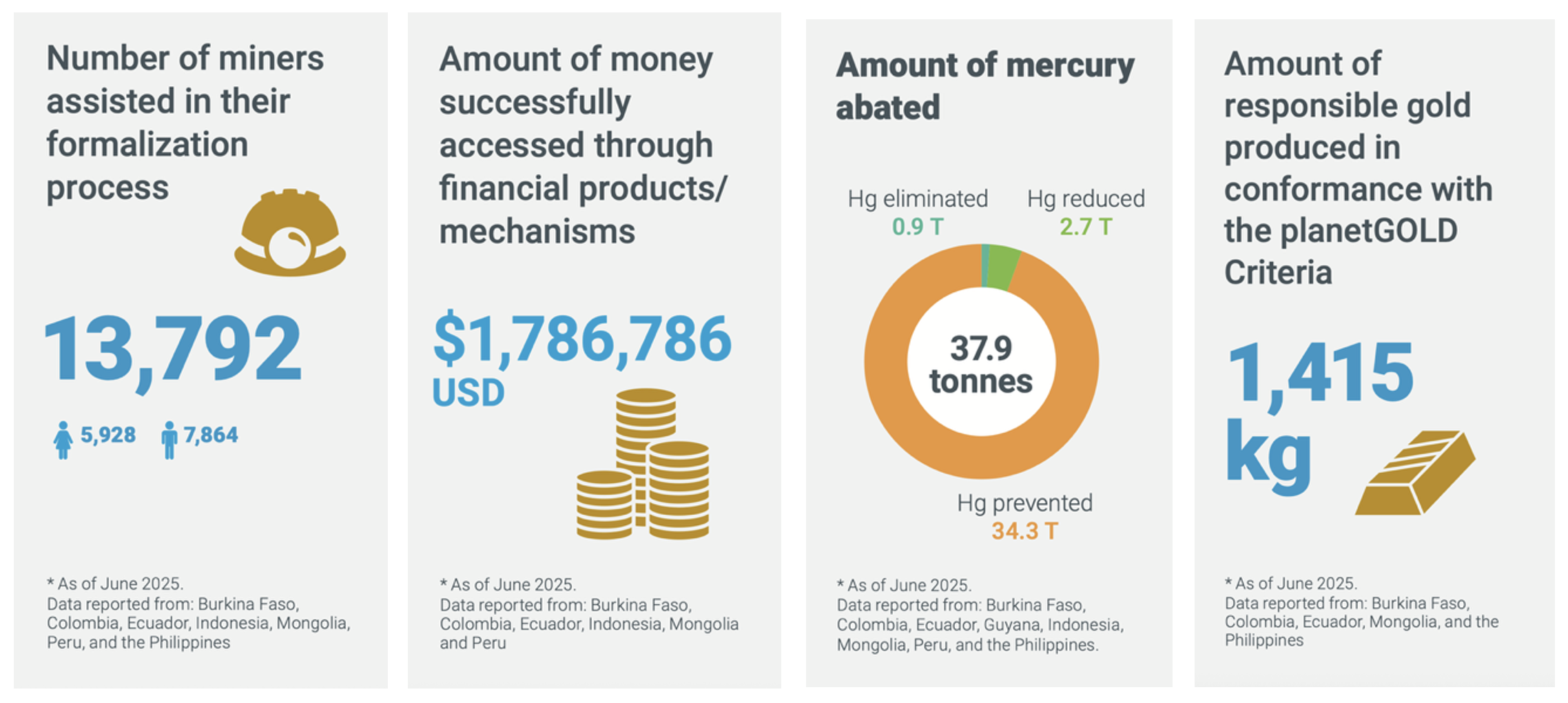
Through these interventions, this initial set of nine country projects: supported thousands of miners in formalizing their operations; helped them unlock nearly $1.8 million dollars from commercial sources to invest in improving their practices; prevented, reduced, or eliminated the use of nearly 38 tonnes of mercury; and facilitated the production of more than 1,400 kilograms of gold produced responsibly according to the planetGOLD Criteria, which is in alignment with international responsible sourcing standards.
Learn More
The comparative analysis in the report is based on the results documented through the country-level reporting of all eight of the initial set of planetGOLD projects, and the planetGOLD Ecuador partner project. As of the publication of this report, all planetGOLD projects in this first group of countries have completed implementation activities, with the exception of planetGOLD Kenya, which is expected to finish in December 2025. Ecuador is continuing its efforts under phase two as a formal member of the planetGOLD programme.
Country-specific case studies and cross-programmatic analyses for specific programme pillar areas were produced in 2024 and early 2025, and can be found on the report resource page.
Activities in the planetGOLD countries were supported by a programme-wide Global Project focused on knowledge management, communications and coordination. This programmatic approach enables more rapid learning and impact by enabling projects to share resources and learn from each other in ways that uniquely facilitate their progress. For a description of the supportive activities undertaken by this global component, read the Global Project Assessment report, which complements the cross-programmatic assessment.
To learn more, click the button below to download and explore the new report in English, French or Spanish. Be sure to also view the other country-specific case studies and analyses of activities across the programme aimed at making mercury history in artisanal and small-scale gold mining.

Knowledge Areas: