
News
07 April 2025
Countries:
Mining remains one of the most hazardous occupations in the world, exposing workers to life-threatening risks such as cave-ins, toxic gas exposure, fires, and underground flooding. In such high-risk environments, preparedness is not optional; it is critical.
To address these dangers and improve safety standards in the artisanal and small-scale gold mining (ASGM) sector, the Department of Environment and Natural Resources – Mines and Geosciences Bureau (DENR-MGB) and the Artisanal Gold Council (AGC) Philippines, in partnership with Itogon-Suyoc Resources Inc. (ISRI) and the Municipal Disaster Risk Reduction Management Office (MDRRMO), organized a five-day Mine Rescue and Safety Training for the Northern Sagada Barangay Small Scale Mining Association (NSBSSMAI) from 24-28 March 2025.

The five-day training was attended by 48 participants from the Northern Sagada Barangay Small Scale Mining Association (NSBSSMAI). Its objective was to equip small-scale miners with the essential skills and knowledge needed for effective mine rescue operations and emergency response.
The program emphasized key areas of mine safety, including hazard recognition, risk assessment, the use of rescue equipment, and the importance of teamwork and communication during emergencies. Trainers from ISRI and the MDRRMO led the sessions, which combined technical instruction with practical simulations.
Modules covered during the training included:
- Safety orientation and company profile
- Safety protocols and regulations
- Hazard identification and risk assessment
- Emergency response planning
- Rescue techniques and equipment
- Working at height and fall protection
- Use and inspection of full-body harnesses
- Simulation exercises and emergency drills
Designed as both a refresher and a capacity-building initiative, the training aimed to enhance safety practices across small-scale mining operations. It highlighted the importance of proactive preparedness in reducing risks and fostering a safety-first culture within the ASGM sector.
The first day of the Mine Rescue and Safety Training began with essential discussions on core safety topics relevant to mining operations. Engr. Darwin B. Tongacan of Itogon-Suyoc Resources Inc. (ISRI) provided an overview of mine rescue operations, covering common underground incidents, team responsibilities, and the proper use of rescue tools.


Mr. Arnold T. Celino then led a session on toxic mine gases, detailing their sources, health risks, and methods for monitoring gas levels in confined spaces. Following this, Mr. Carlos B. Dacyo conducted a technical discussion on secondary ventilation systems and appropriate control measures to ensure airflow in underground environments.
The day concluded with a session on basic life support and first aid, led by Head Nurse Mr. Willer L. Catimo. This hands-on session introduced miners to essential life-saving techniques, including CPR, wound treatment, and emergency response protocols.
Building on this foundation, the second day focused on applied skills in first aid. Participants engaged in practical demonstrations, learning how to effectively use medical equipment and supplies during emergencies.
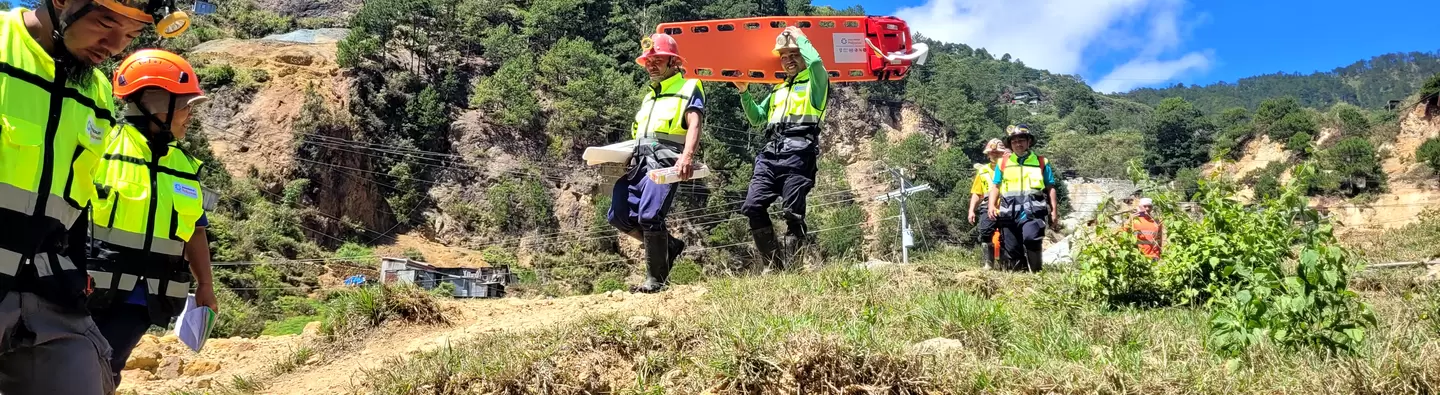
On the third day, participants underwent a simulation exercise to test their understanding of the lessons from previous sessions. The scenario-based drills presented miners with real-time decision-making challenges, reinforcing their readiness for actual emergencies.
The training, facilitated by ISRI professionals, emphasized the importance of a proactive and united approach to mine safety. Through a combination of expert instruction and experiential learning, miners were equipped with both the knowledge and confidence needed to handle life-threatening situations underground.
Engr. Darwin B. Tongacan, Ore Reserve Engineer at ISRI, underscored the value of collaboration across the mining sector:
“Safety is a responsibility we all share, whether in large-scale or small-scale mining. That’s why we believe it’s essential to conduct mine rescue training not just within our company, but also in partnership with our small-scale mining communities.
By working hand in hand, we strengthen our collective ability to respond to emergencies and save lives. Small-scale miners often operate in more challenging and less regulated conditions, so empowering them with life-saving knowledge and rescue skills makes a significant difference.
This collaboration fosters mutual respect, unity, and enhances the culture of safety across the mining sector. When an accident occurs, it doesn’t matter how big or small the operation is—what matters is that we’re ready to help each other. Together, we make mining safer for everyone.”
The training fostered a renewed culture of safety and preparedness among participants, reinforcing the principle that mining communities—regardless of scale—must be equipped and ready to protect lives during every shift underground.
Photos 1 and 2: Mine Rescue Stimulation

Photo 3: NSBSSMAI Miners with trainers from Itogon-Suyoc Resources Inc. (ISRI)
On the fourth day of training, participants learned about Working at Height, covering safety hazards, fall prevention, and harness use, led by Mr. Dhenver Lagasi. Mr. Czakie Bert Bomowey then conducted a demonstration on rescue knots and lines. The final day included a simulation at the MFPS Facility, conducted by MDRRMO trainers, with participation from MGB personnel and NSBSSMAI miners.

Photo 4: Participants during the discussion on Working at Height with Mr. Denver Lagasi


Photos 5 and 6: Stimulation with the trainers from the Municipal Disaster Risk Reduction Management Office (MDRRMO)
“Many small-scale gold miners have inherited this livelihood through generations, learning traditional practices passed down by their ancestors. However, these methods often come without access to formal training in mine safety,” said Ms. Abigail Ocate, National Project Manager of the Artisanal Gold Council Philippines. “This is why it’s vital that we equip them with the right knowledge and tools to help ensure their safety and well-being as they continue their work.”
The successful completion of the five-day Mine Rescue and Safety Training marks a significant milestone in improving the safety and resilience of the small-scale mining community in Northern Sagada. By equipping miners with essential life-saving skills and strengthening their understanding of safety protocols and emergency response, the initiative enhances not only individual preparedness but also the collective capacity of the ASGM (artisanal and small-scale gold mining) sector.
As part of its ongoing commitment to fostering responsible mining practices, the planetGOLD Philippines project provided the Northern Sagada Barangay Small-Scale Mining Association (NSBSSMAI) with safety equipment valued at approximately Php 420,500.00. The donation included critical personal protective gear designed to improve working conditions and reduce occupational hazards.
To ensure proper and effective use of the equipment, the donated items were incorporated into hands-on exercises and simulation drills during the training. These sessions allowed miners to familiarize themselves with the correct procedures for handling and wearing the gear—further reinforcing the project's emphasis on practical learning, risk reduction, and safety-conscious mining operations.
With continued collaboration between government agencies, civil society, and mining communities, initiatives like this provide a strong foundation for cleaner, safer, and more inclusive practices in the Philippines’ ASGM sector.

The planetGOLD Philippines Project is funded by the Global Environment Facility, implemented by the United Nations Environment Programme, and the United Nations Industrial Development Organization, in partnership with the Department of Environment and Natural Resources and the Mines and Geosciences Bureau, and executed by the Artisanal Gold Council.
For more updates about the activities of planetGOLD Philippines:
Knowledge Areas: