
News
22 April 2026
Countries:
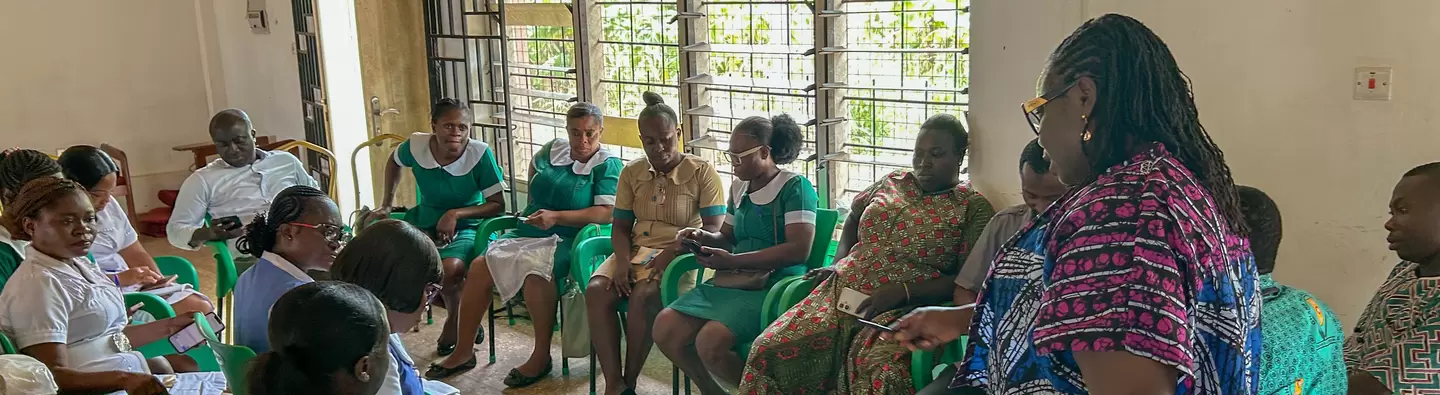
Sixty-five health professionals and community volunteers in the Adansi North District have undergone intensive training on the health and environmental impacts of mercury exposure associated with Artisanal and Small-Scale Gold Mining (ASGM) activities.
The two-day Trainer of Trainers (TOT) workshop, organized under the planetGOLD Ghana Project, sought to strengthen the capacity of frontline health workers to recognize, prevent, and respond to mercury-related health conditions in mining communities.

Participants included Physician Assistants, Nurses, Public Health Officers, Health Promotion Officers, Community Volunteers, Environmental Protection Authority (EPA) officers, and other stakeholders. The training was facilitated by members of the Health Education Technical Working Group from the Ministry of Health, Ghana Health Service, and the School of Hygiene of the Korle-Bu Teaching Hospital.
Opening the workshop, the Adansi North District Director of Health Services, Mr. Eric Agyeman Atuahene, described mercury exposure as a major public health concern in mining communities. He noted that the training would equip participants with the knowledge and skills needed to identify symptoms of mercury exposure, improve preventive practices, and enhance community education efforts.

He commended the organizers for the timely intervention and urged participants to actively engage in discussions and share experiences to maximize the impact of the training.
The Deputy Director and Head of the Obuasi Area Office of the Environmental Protection Authority, Mr. Moses Kpebu, stressed the important role health professionals play in addressing mercury-related illnesses. He encouraged participants to use the knowledge acquired not only to provide clinical care but also to educate patients and communities about the dangers of mercury exposure and ways to prevent it.
Mr. Kpebu reaffirmed the EPA's commitment to collaborating with the Ghana Health Service to address the health and environmental consequences of mercury use in the artisanal and small-scale mining sector.
Speaking at the event, the Project Coordinator of the planetGOLD Ghana Project, Mr. Lovelace Sarpong, said the workshop formed part of efforts to promote mercury-free gold processing technologies and improve awareness of the risks associated with mercury exposure.

According to him, health workers play a critical role in community outreach, health promotion, and the early detection of mercury-related health conditions. He added that the training would help ensure the sustainability of project interventions as participants are expected to transfer the knowledge acquired to their colleagues and communities.
During the workshop, participants received presentations on the Minamata Convention on Mercury, health and safety regulations in artisanal mining, the properties and uses of mercury, environmental contamination pathways, and the health effects of mercury exposure.
Facilitators highlighted how mercury pollution can contaminate soil, air, and water bodies, eventually entering the food chain through fish and other aquatic organisms. Participants also learned about symptoms of mercury poisoning, including tremors, memory loss, vision and hearing impairment, and developmental disorders in children.
The training further explored broader public health challenges commonly found in mining communities, including poor sanitation, unsafe working conditions, child labour, and limited access to healthcare services.
As part of practical learning activities, participants were divided into groups to identify and discuss the impacts of mercury contamination on air, land, and water resources. The group presentations generated lively discussions and demonstrated a strong understanding of mercury exposure pathways and associated risks.

At the end of the workshop, participants received copies of a Health Education Manual and educational posters on the impacts of mercury exposure developed under the planetGOLD Ghana Project.
The workshop recommended that District and Municipal Assemblies in mining areas incorporate provisions on mercury use into local by-laws to support national efforts aimed at phasing out mercury in artisanal and small-scale gold mining. Participants also called for similar training programmes to be extended to other mining districts across the region.
Participants expressed appreciation to the organizers and pledged to apply the knowledge gained in their health facilities and community outreach activities to help reduce mercury exposure and protect public health in mining communities.
Knowledge Areas: