
News
23 July 2025
Countries:
As part of efforts to promote gender equality in the Artisanal and Small-Scale Gold Mining (ASGM) sector, the Environmental Protection Authority (EPA), under the planetGOLD Ghana Project, has initiated a comprehensive review of gender responsiveness in ASGM policies, regulations, and operations.
The initiative forms part of a broader commitment to integrate gender mainstreaming into Ghana’s mining value chain.
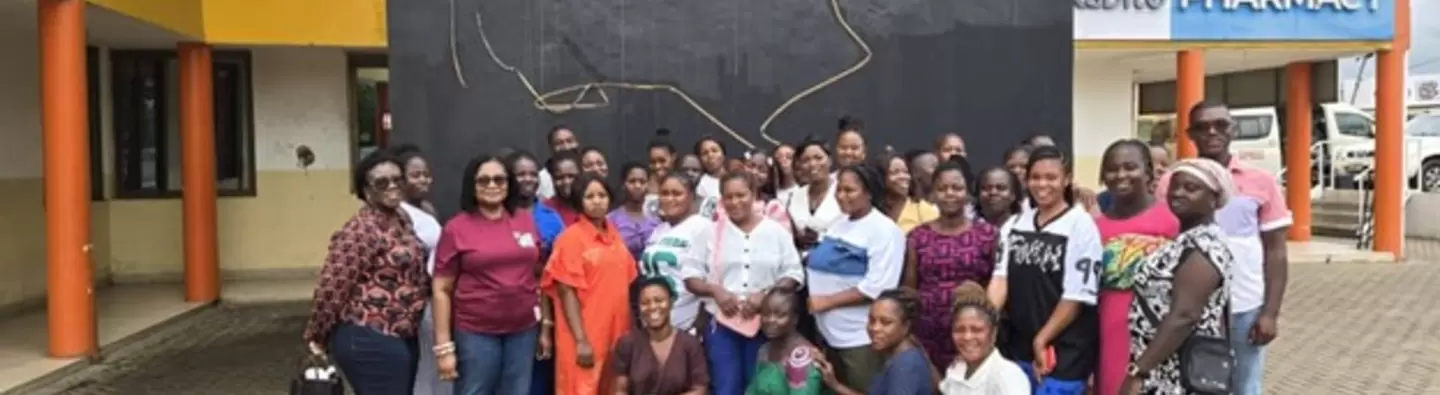
Field teams, led by Mrs Jewel Kudjawu the planetGOLD Ghana Project Gender officer, embarked on a series of community engagements in the Eastern Region to collect first-hand data.
Using structured questionnaires, the team visited four key mining communities , Dome, Hemang, Jampomgmane, and Dwenase, to interact with women’s mining groups and assess the realities they face on the ground.
The Gender Officer said their findings revealed that in all four communities, women’s groups actively participate in gold processing and other small-scale mining activities.
She said these groups, made up mostly of women aged 18 to 45 with low levels of formal education, were formed to support income generation and community development.
She said the data also revealed that across the communities, a common business model emerged: members access capital through loans from sponsors, who in turn buy the processed gold.
“Most groups reported no formal dues system or financial training, and profits are shared among members after purchasing and processing ore bought from concession owners.”
Despite their economic contribution, these women face numerous systemic barriers.
According to the Officer, women expressed a strong desire to climb the mining value chain. Many aspire to own mining concessions, while others were eager to receive training in operating excavators and heavy-duty trucks skills traditionally dominated by men in the industry.
On financial inclusion, she said financial inclusion remains low as few women maintain bank accounts, and none have accessed formal bank loans.
“Instead, most rely on informal savings systems, which often result in loss of savings.”
She said the data also revealed that, women in the four communities had limited access to formal finance, impeding their ability to expand operations.
Some other challenges include insecurity and harassment by regulatory authorities, harmful cultural taboos and bans on bringing children to mining sites and prohibitions on certain foods and clothing believed to interfere with mining success.
She said the team also engaged in stakeholder Engagements which revealed various gabs in Institutional Support.
“The planetGOLD Ghana Project’s engagements reveal a clear picture: women are actively participating in Ghana’s ASGM sector, but face significant financial, cultural, and operational barriers”
She noted that it was important for women to be supported to advance in the mining value chain through training and access to concessions.
“Financial literacy programs must be introduced, and women should be encouraged to open business bank accounts.”
She also advised that mining companies and regulatory bodies must adopt and implement gender-responsive policies, while cultural beliefs and taboos that limit women’s participation in mining must be addressed through community sensitization and dialogue.
The planetGOLD Ghana Project, funded by the Global Environment Facility (GEF) and implemented by the Environmental Protection Authority, seeks to tackle these challenges by promoting mercury-free technologies, improving access to finance, and strengthening responsible supply chains. The engagement forms part of broader efforts to formalize the sector and improve the livelihoods of mining communities across the country.
Knowledge Areas: