

Voices
18 December 2025
Countries:
-
 Communications Consultant, planetGOLD Uganda
As the planetGOLD Uganda project reaches its halfway mark of implementation, the artisanal and small-scale gold mining (ASGM) sector stands at a defining moment, one where every stakeholder is moving to make mercury use a thing of the past. At this year’s Annual Stakeholders’ Meeting, government leaders, development partners, miners, and civil society took stock of the project progress and reaffirmed a collective commitment to a mercury-free gold mining sector. This is the third meeting of its kind since project inception.
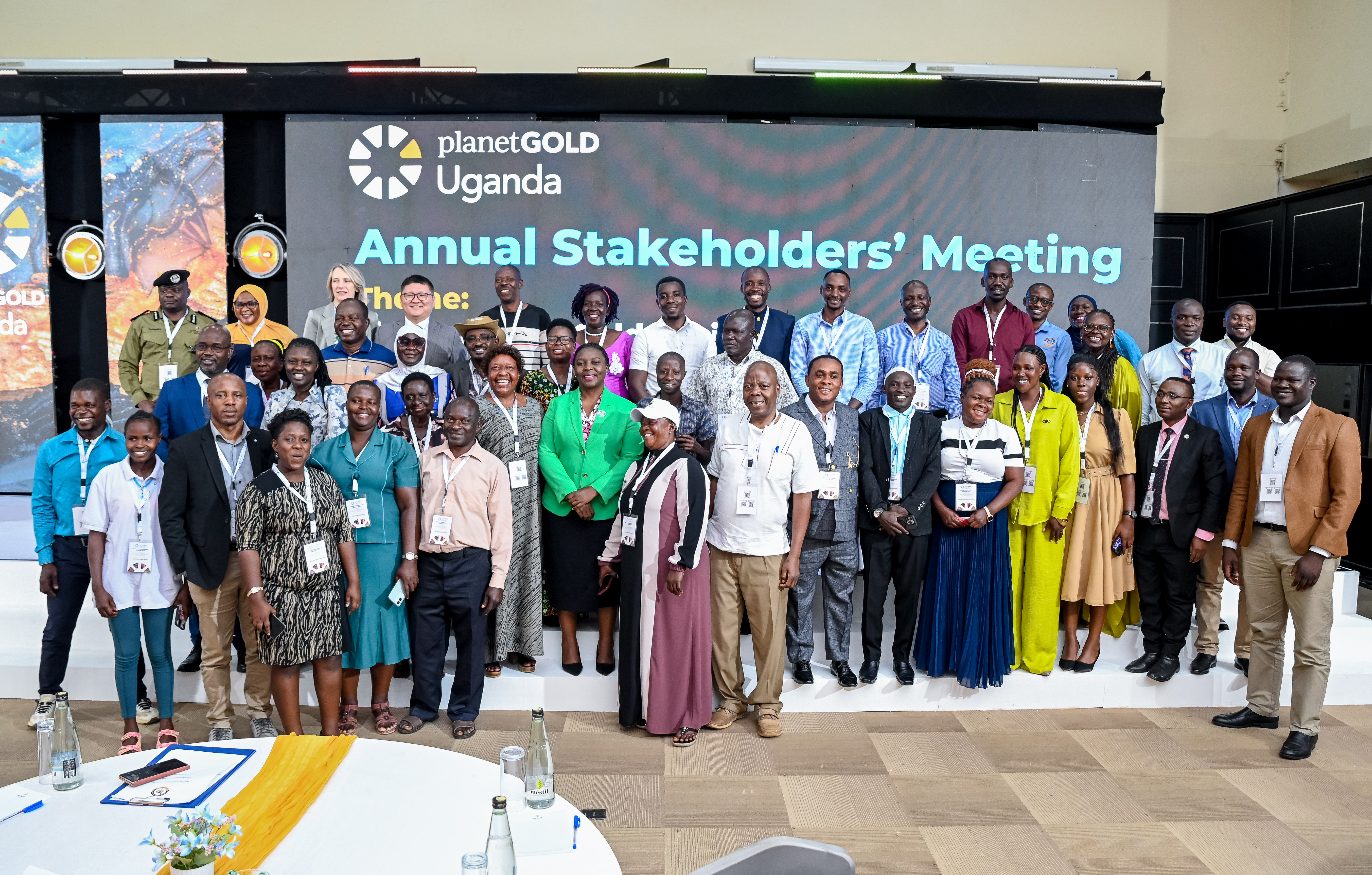
The meeting started with remarks from Lynn Gitu, planetGOLD Uganda’s project manager, who underscored its purpose. “This is not just a meeting. It’s a show of commitment on our part to make sure the ASGM sector becomes mercury-free,” she said.
Lynn noted that the project’s presence in the communities where it is implemented and its continuous sensitisation on safer practices has begun to shift mindsets and lay the groundwork for a sustainable transition. With the ASGM sector contributing to the livelihoods of more than 70,000 Ugandans, she emphasised that protecting miners from mercury is not optional.
Collaboration is key
Joanne Lebert, the Executive Director of IMPACT, the project’s executing agency, reaffirmed the project’s alignment with Uganda’s national priorities including formalization of the ASM sector, phasing out of mercury use, and enhanced domestic revenue mobilisation through value addition.
Joanne stressed that sustainable change is only possible when local communities guide the process. “Local communities must remain our guiding star,” she noted, reminding the audience that long-term transformation depends on solutions built collaboratively with both miners and authorities.
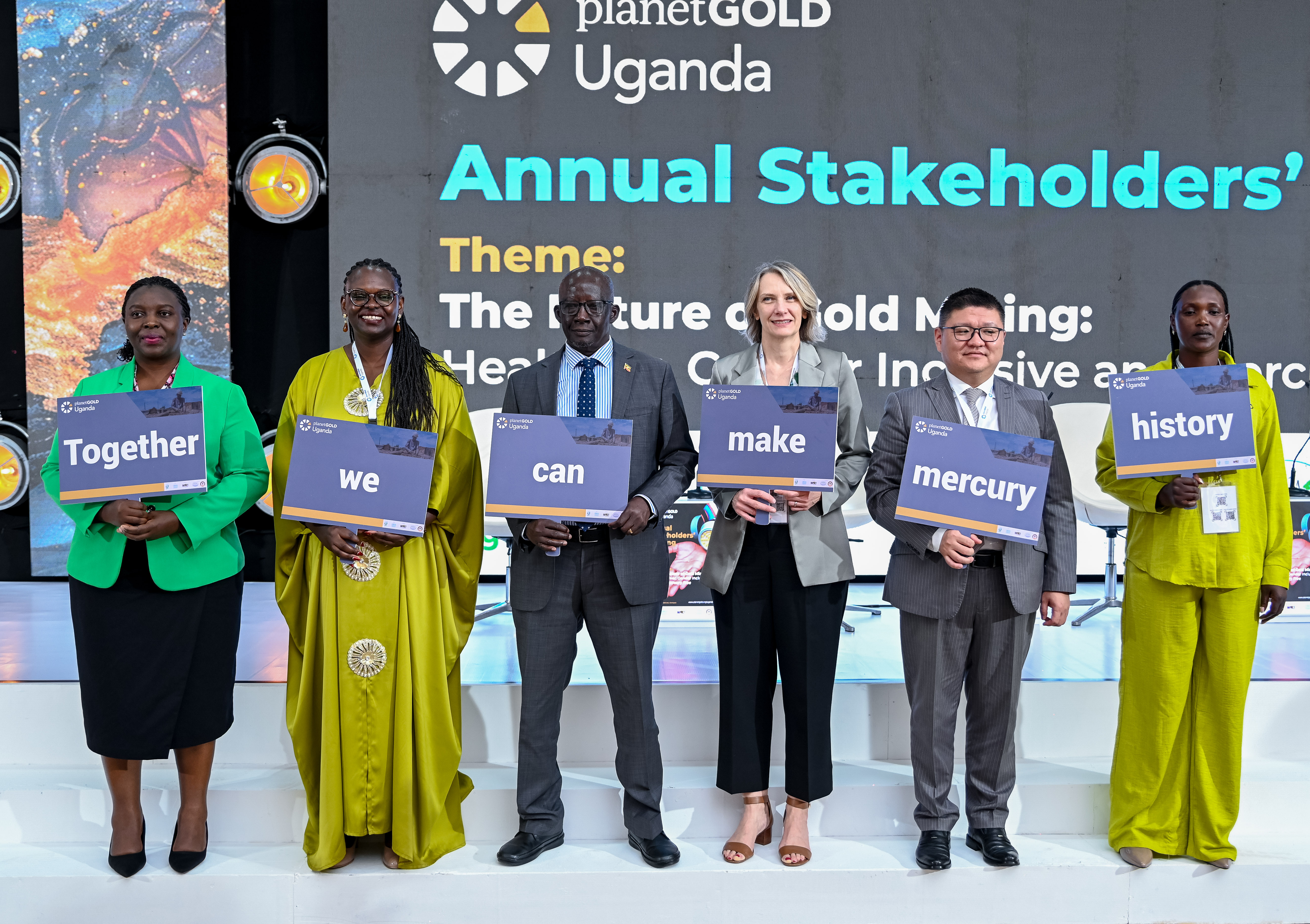
Representing United Nations Environment Programme (UNEP), Altanbagana Bayarsaikhan, reinforced the urgency of eliminating mercury from ASGM in line with the Minamata Convention. He commended Uganda’s leadership and the project’s hands-on engagement with mining communities. “Our mission to eliminate mercury is urgent and essential,” he said, highlighting that the planetGOLD Uganda project is helping the country fulfill a global obligation while advancing safer, cleaner, and more responsible mining systems. He emphasised that the meeting is vital for shaping the future of a sector that supports thousands of Ugandan households.
ASGM is rooted in Uganda’s history
The guest of honour, Irene Batebe, the Permanent Secretary Ministry of Energy and Mineral Development, brought a strong message of collaboration, recognition, and national direction. She congratulated planetGOLD Uganda for the achievements recorded in 2025, noting that these accomplishments reflect a steadfast commitment to improving the livelihoods of artisanal and small-scale gold miners.
Batebe reminded participants that ASGM is not new to Uganda, rather, it is woven into the country’s history and economy. Though often labeled informal, the sector plays a critical role in job creation and holds significant potential for contributing to national revenues. “The ASGM industry has demonstrated entrepreneurship, resilience, and determination,” she said, pointing to testimonies and videos from the field that showcased the difficult, yet dignified work carried out by miners each day.
She described the Ministry’s partnership with planetGOLD Uganda as far more than a project relationship: “Sometimes we view planetGOLD as an extension of the Ministry,” she remarked. This close collaboration is driven by a shared mission to protect communities, safeguard the environment, promote responsible mining, and ensure the sector’s contribution to Uganda’s socioeconomic transformation.
Mercury use is prohibited in Uganda
A central part of Batebe’s address focused on Uganda’s obligations and commitments under the Minamata Convention on Mercury. She clarified that use of mercury in mining is prohibited in Uganda and emphasised the government’s dedication to supporting miners through the transition to safer alternatives. “Your health is your wealth,” she reminded miners. “You might have the gold and spend the money in a hospital bed. Let us keep that in mind.”
After a full day of dialogue, reflections, and planning, Dr. Barirega Akankwasah, Executive Director of National Environment Management Authority (NEMA), delivered the closing message. He spoke with passion about the importance of aligning environmental stewardship with economic opportunity. “Uganda is not merely fulfilling an international obligation,” he said. “We are protecting our people, our ecosystems, and the future of our national economy.”
He celebrated the consensus reached during the meeting, that mercury-free technologies are both practical and capable of producing more gold. He also announced that the National Environment Fund, now three years old, will soon begin disbursing additional grants to local governments, 70% of which is dedicated to environmental compliance and livelihood support for mining communities.
Dr. Barirega emphasised that the trajectory of Uganda’s artisanal mining landscape can be transformed through multi-stakeholder partnerships: government, miners’ associations, private sector, civil society, and development partners working together. He called on all stakeholders to carry forward the spirit of collaboration: “This is not the end of a meeting, but the beginning of a journey,” he said.
As the action-packed meeting concluded, one message was clear, miners and Ugandans are ready to demonstrate that responsible, mercury-free artisanal gold mining is not only possible, but essential to building a healthier, and more sustainable future for all.
The planetGOLD Uganda project is supported by the Global Environment Facility (GEF) and led by the UN Environment Programme (UNEP). It is executed by IMPACT in partnership with Uganda’s National Environment Management Authority (NEMA) and the country’s Ministry of Energy and Mineral Development under the Department of Mines. The project aims to reduce the use of mercury by supporting formalization of the artisanal gold mining sector and increasing access to finance. This will lead to adoption of mercury-free technologies and allow access to more responsible and traceable gold supply chains.
Knowledge Areas: